
Eddie Codel
The Basalt Columns of Eystrigja
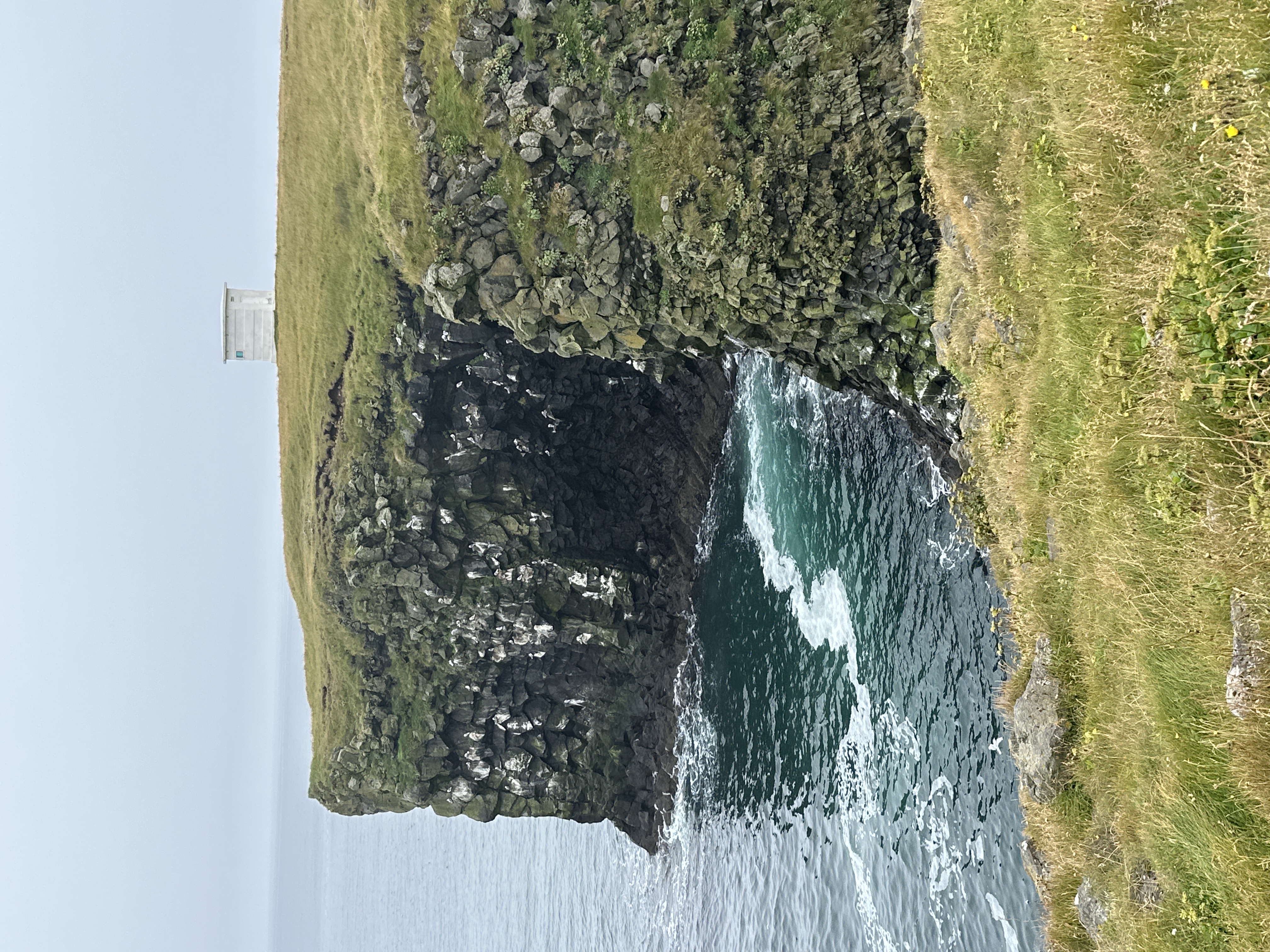
Nature and human engineering have collaborated here to create a landscape that is both ruggedly beautiful and historically significant. The jagged, dark cliffs are composed of columnar basalt, a volcanic rock formation that occurs when thick lava flows cool and contract, cracking into these distinct hexagonal and geometric shapes. Because this region is home to the Snæfellsjökull glacier-volcano, these formations are reminders of the intense geothermal energy that has shaped the Snæfellsnes Peninsula over millennia.
Perched atop the cliff is a small, white, utilitarian structure that stands in stark contrast to the wild coastline. This is an old Icelandic lighthouse or navigational aid station, typical of the structures used along the treacherous North Atlantic coast. While it looks like a simple shed to the untrained eye, these outposts have been critical for the safety of local fishermen who have navigated these turbulent waters for centuries. The white color is intentional, designed to be highly visible against the dark volcanic rock and green moss, even in the heavy fog or driving rain common to the Western Region.
Between these cliffs lies the Eystrigja stone bridge, a natural arch carved by the relentless erosion of the sea. Over thousands of years, the pounding waves of the Atlantic have exploited weak points in the basalt, eventually hollowing out a passage. While the bridge looks sturdy, it is a dynamic feature of the landscape, slowly but surely being reclaimed by the ocean. The white streaks you see on the cliff faces are guano from the thousands of seabirds, such as kittiwakes and fulmars, that use these sheer walls as protected nesting sites. For the local community in Arnarstapi, this area is not just a scenic vista but a place steeped in folklore, often associated with the saga of Bárður Snæfellsás, a half-human, half-troll figure who is said to be the protector of the peninsula.
Eystrigjá Basalt Chasm
Eystrigjá is a sea-eroded basalt chasm on the Snæfellsnes Peninsula. These vertical cliffs are composed of columnar basalt, formed by the rapid cooling of thick lava flows from the nearby Snæfellsjökull volcanic system. The cooling process causes the rock to contract into hexagonal or polygonal prisms.
The white streaks on the dark rock faces are guano deposits, primarily from Black-legged Kittiwakes and Northern Fulmars that nest on these narrow ledges during the summer. These cliffs provide critical protection for seabirds from terrestrial predators like the Arctic fox. The small white structure on the plateau is a navigational beacon, essential for small fishing vessels navigating the turbulent, rock-strewn waters along the coast of Arnarstapi, which has historically been one of Iceland's most important natural harbors for the shark and cod trade.
The Basalt Bridge of Arnarstapi
Eystrigja is a natural basalt stone bridge formed by marine erosion. The columns are columnar basalt, created when thick lava flows cooled slowly and contracted into hexagonal joints. This specific area of the Snæfellsnes Peninsula is a major nesting site for Black-legged Kittiwakes and Fulmars; the white streaks on the rock face are "guano" (bird excrement), which provides a rich nitrogen source for the vibrant green moss and scurvygrass clinging to the cliffs.
The small white structure above is a lighthouse/beacon, essential for navigating the treacherous, rocky coastline of Arnarstapi, which was a vital fishing hub during the Danish trade monopoly (1602–1787). In local folklore, these cliffs are the domain of Bárður Snæfellsás, a half-giant protector who supposedly retreated into the Snæfellsjökull glacier.