UG
Ulrich Gall
The Engine of the Carriel
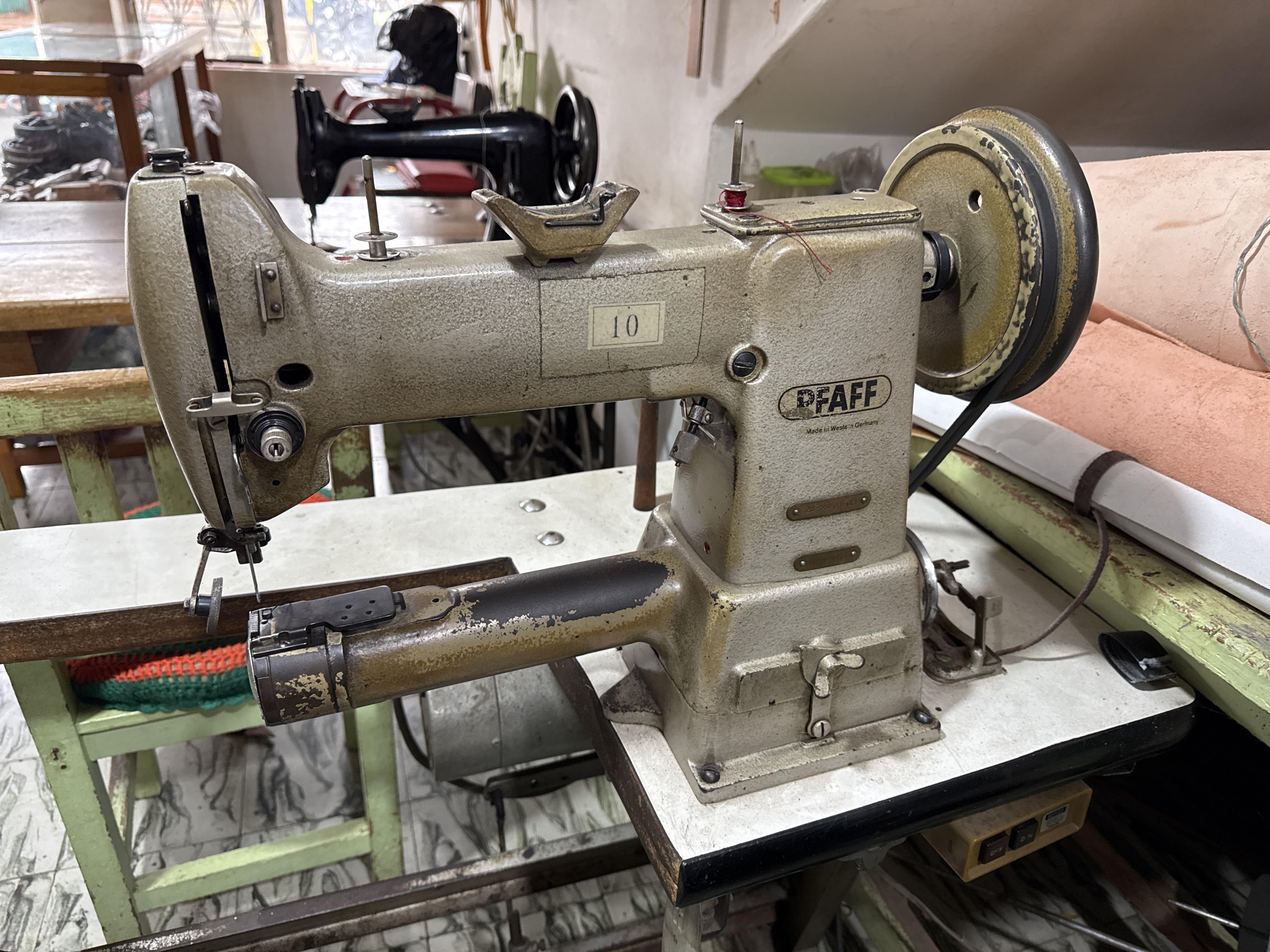
High in the mountains of Antioquia, the town of Jericó is world-famous for a very specific craft: the "Carriel." This heavy-duty, cylinder-arm Pfaff sewing machine is a critical tool in that legacy. While it might look like a standard vintage industrial machine, its specialized shape—specifically that protruding horizontal arm—allows a leatherworker to sew three-dimensional shapes, curves, and tight corners that would be impossible on a flat-bed machine.
This is the backbone of Jericó’s artisan economy. The Carriel is a traditional Colombian leather satchel, historically used by muleteers (arrieros) who traversed these rugged mountains. A true Jericó Carriel is unmistakable; it famously features numerous hidden compartments—sometimes up to twelve—where mountain travelers would hide gold, tobacco, or letters. The machine you see here, a German-engineered Pfaff, was imported decades ago and is prized for its ability to punch through thick, high-quality hides, including the distinct "pelo" or fur-on rawhide typically used for the bag's flap.
In a town like Jericó, these machines are often family heirlooms, passed down through generations of "guarnicioneros" (leather harness makers). Because the town is a protected cultural heritage site, many of these small workshops operate out of the front rooms of colorful colonial houses. The "10" marked on the side likely refers to a workstation number in a larger communal shop or a specific setting used by the crafter to maintain consistency in their needlework. Seeing these machines in person is a window into a pre-industrial style of manufacturing that has remained largely unchanged for over a century, keeping one of Colombia's most iconic fashion symbols alive.
The Backbone of the Carriel
This industrial Pfaff sewing machine is a specialized "cylinder arm" model, a critical tool in Jericó’s world-renowned leatherworking industry. Unlike standard flatbed machines, the horizontal arm allows a craftsman to manipulate 3D shapes—such as the village’s signature *Carriel* (a traditional Antioquian leather satchel)—around the needle, facilitating complex stitching on gussets, tubular straps, and stiff leather pockets.
Jericó is designated a *Pueblo Patrimonio* (Heritage Town) of Colombia, largely due to its preservation of these saddlery techniques. The *Carriel antioqueño* is a cultural icon, historically worn by *arrieros* (muleteers). A traditional Carriel is recognizable by its cowhide exterior with hair left on, and it famously contains up to 12 hidden compartments, or "secrets," used by muleteers to hide money, tobacco, or even charms against the "evil eye." Because of the thickness of the leather and the density of the stitching required to assemble these multi-pocketed bags, heavy-duty German engineering like this Pfaff machine became the backbone of local workshops throughout the 20th century.
The Engine of the Carriel
Pfaff 335 cylinder arm industrial sewing machine, likely mid-20th century German manufacture. Designed specifically for leatherwork and upholstery. The horizontal "cylinder bed" allows stitching of tubular or curved items that flatbed machines can’t handle, such as boots, handbags, and wallets.
Crucial tool for Jericó’s historic leather industry. This town is the birthplace of the *Carriel Antioqueño*, the iconic accordion-styled leather satchel used by Colombian coffee pickers (*arrieros*). Traditional carrieles feature up to 12 hidden compartments (some for secret letters, others for charms or money). Jericó remains one of the few places where these are still handcrafted using heavy-duty machinery like this Pfaff and specialized foot-powered tools. Industrial-grade walking foot mechanism ensures thick layers of hide move evenly without bunching. Essential for the town's ongoing status as a center for high-quality Andean leather craftsmanship.