UG
Ulrich Gall
The Silent Cables of Jericó
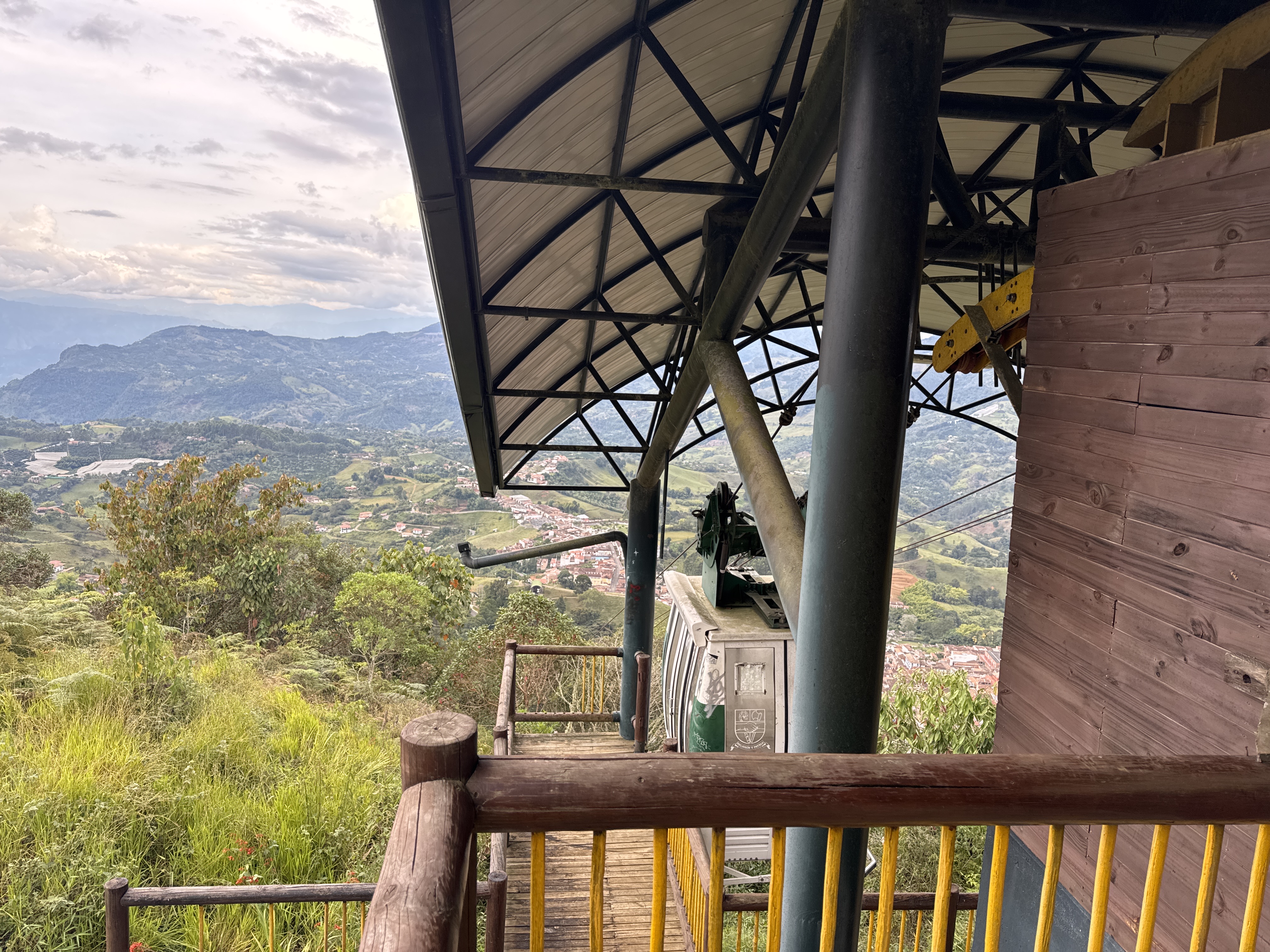
Perched high above the red-tiled roofs of Jericó, this silent cable car station stands as a poignant reminder of a grand ambition that literally ground to a halt. While Colombia is famous for its "Metrocables" that revolutionized urban transport in cities like Medellín, this particular system, known as the Teleférico de Jericó, tells a different story—one of engineering struggle and local perseverance.
Inaugurated in 2007, the cable car was designed to connect the town center to the stunning viewpoint of Morro El Salvador, where a massive statue of Christ overlooks the valley. For a few years, it whisked locals and tourists over the lush coffee plantations and steep Andean slopes, offering a bird's-eye view of one of Colombia's most beautiful "Pueblos Patrimonios" (Heritage Towns). However, the system was plagued by technical difficulties and high maintenance costs. In 2015, a serious mechanical failure involving one of the cabins led to its indefinite closure.
What you see today is a "ghost" station. The gondolas sit frozen on their cables, and the mechanisms are slowly being reclaimed by the humid mountain air. Despite the lack of moving machinery, the site remains a popular "end of the road" for hikers. From this vantage point, you can see how Jericó is tucked into a natural fold of the Cordillera Central. The town is the birthplace of Mother Laura Montoya, Colombia's first saint, which has turned the area into a major pilgrimage site. Even though the teleférico no longer runs, the trek up to this station provides the best perspective on the town's grid-like colonial layout and the dramatic green cliffs that define the Antioquian landscape.
The Silent Teleférico of Jericó
This suspended car is part of the Teleférico de Jericó, a cable car system connecting the town to the Morro El Salvador viewpoint. Once a primary tourist draw, it has been plagued by mechanical failures and local government disputes, leading to its indefinite closure several years ago.
The infrastructure remains a "white elephant" in the region—a term used in Colombia for expensive public works projects that are abandoned or never completed. While common across the country due to corruption or shifting political budgets, this specific site sits atop a heritage town known for its religious significance as the birthplace of Mother Laura, Colombia's first saint. The abandonment reflects a broader tension in Antioquia between rapid tourism development and the maintenance of aging infrastructure in rugged, high-altitude terrain.
The Abandoned Gondola of Jericó
The Teleférico de Jericó. A monocable gondola system connecting the town to the Morro el Salvador. Built to boost tourism in this "Pueblo Patrimonio," it has been a white elephant for years. Currently abandoned due to maintenance negligence and safety failures.
The single cabin visible remains suspended in a state of decay. Frequent mechanical breakdowns and legal disputes between the municipality and contractors led to its indefinite closure around 2015. Locals often view it as a symbol of government corruption and wasted public funds.
The surrounding mountains are part of the Cordillera Central. Below lies Jericó, famous for the *carriel*—a traditional leather satchel with secret compartments once used by muleteers to hide money or tabacco. The station is now a haunt for urban explorers and hikers seeking the panoramic view of the Cartama valley without the ticket price.