UG
Ulrich Gall
Jericó: The Intellectual Soul of Antioquia
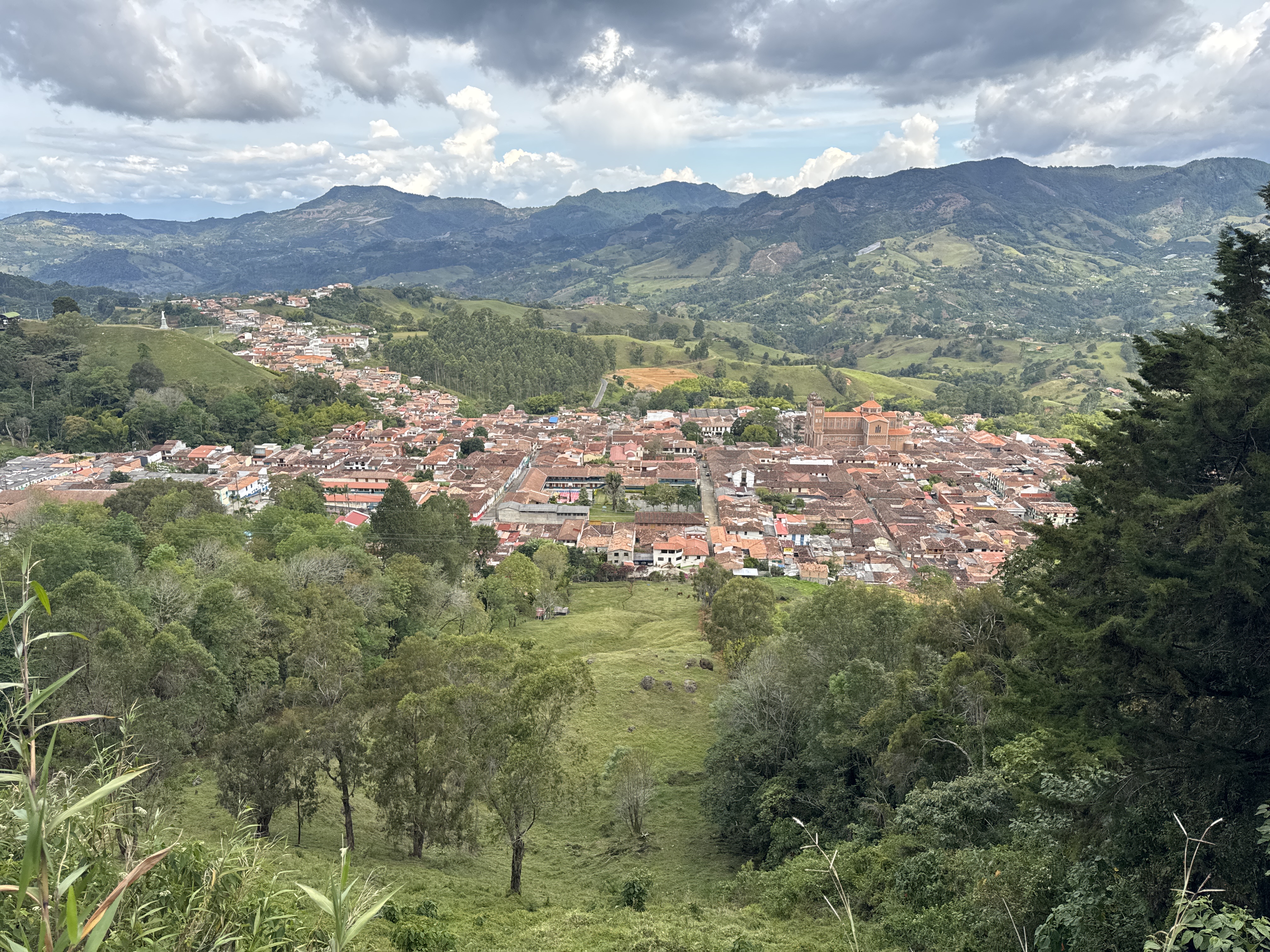
Jericó is often called the "Athens of Southwest Antioquia," a testament to its deep intellectual and religious roots in the heart of Colombia’s coffee-growing region. Looking out over the town, you’ll notice its remarkably uniform architecture, characterized by clay-tiled roofs and whitewashed walls, which is a hallmark of the "Antioquian Colonization" style of the 19th century.
What makes this specific town extraordinary is its claim to fame as the birthplace of Santa Laura Montoya, the first and only Colombian to be canonized as a saint. Her legacy turns this scenic town into a major pilgrimage site. The large, imposing brick structure dominating the skyline is the Cathedral of Our Lady of the Mercies. Interestingly, while most Spanish-colonial towns follow a strict grid around a central plaza, Jericó’s layout is a bit more eccentric because it clings to the rugged, steep slopes of the Piedras River valley.
The lush green hills surrounding the town aren't just for show; this is the gateway to the Páramo del Sol, a unique high-altitude ecosystem. If you look closely at the verdant slopes, you might see the small, bright patches of coffee plantations that fuel the local economy. Another local oddity you might encounter while walking through the streets below is the "Carriel." This is a traditional leather satchel with multiple secret compartments, originally used by muleteers to carry everything from money to tobacco and talismans. Today, Jericó remains the world capital for making these distinctive bags by hand.
The viewpoint you are standing at, near the Gruta de la Inmaculada (Grotto of the Immaculate), reflects the deeply spiritual nature of the community. These grottoes are common throughout the Colombian Andes, serving as quiet places for reflection for a population that blends devout Catholicism with a rugged, independent mountain identity.
Jericó, the Athens of the Southwest
Jericó is one of Colombia’s sixteen *Pueblos Patrimonios* (heritage towns), renowned for its deep-rooted Catholicism and coffee culture. The town is the birthplace of Santa Laura Montoya, Colombia’s first and only canonized saint; her childhood home is now a major pilgrimage site.
The large red-brick structure dominating the skyline is the Diocese of Jericó Cathedral. Because the town is situated on a steep mountainside in the Cordillera Central, its urban planning follows a rare "ladder" layout, where streets were built by excavating the slope to create flat terraces.
A significant local cultural export is the *Carriel*, a traditional leather satchel with multiple secret compartments. Historically used by *arrieros* (muleteers) to carry tools, money, and tobacco, the design is strictly regulated to preserve its status as a piece of national cultural heritage.
Jericó, Colombia's Cultural High Ground
Jericó, Antioquia: a "Pueblo Patrimonio" perched in the Andes. Known as the "Athens of Southwest Antioquia" for its deep-rooted religious and intellectual culture. Home of Mother Laura Montoya, Colombia’s first saint; her influence permeates the town’s numerous churches and shrines.
Dominating the skyline is the Catedral Nuestra Señora de las Mercedes, a massive brick structure rebuilt after a 1979 earthquake. The town is the birthplace of the *carriel*, the iconic accordion-like leather satchel used by the region's *arrieros* (muleteers). Traditional carriels must have 12 pockets, including "secret" ones for money and letters.
The Gruta de la Inmaculada offers a view over the "tapestry" of red-tiled roofs. Economically, the area is defined by coffee and cardamom—Jericó is a top global cardamom producer. Note the steep, meticulously gridded streets designed for mountain terrain. Geologically, it sits in the Cauca River valley's orbit, characterized by high rainfall and rich volcanic soil supporting dense cloud forests and biodiversity.