UG
Ulrich Gall
The Devotional Trails of Jericó
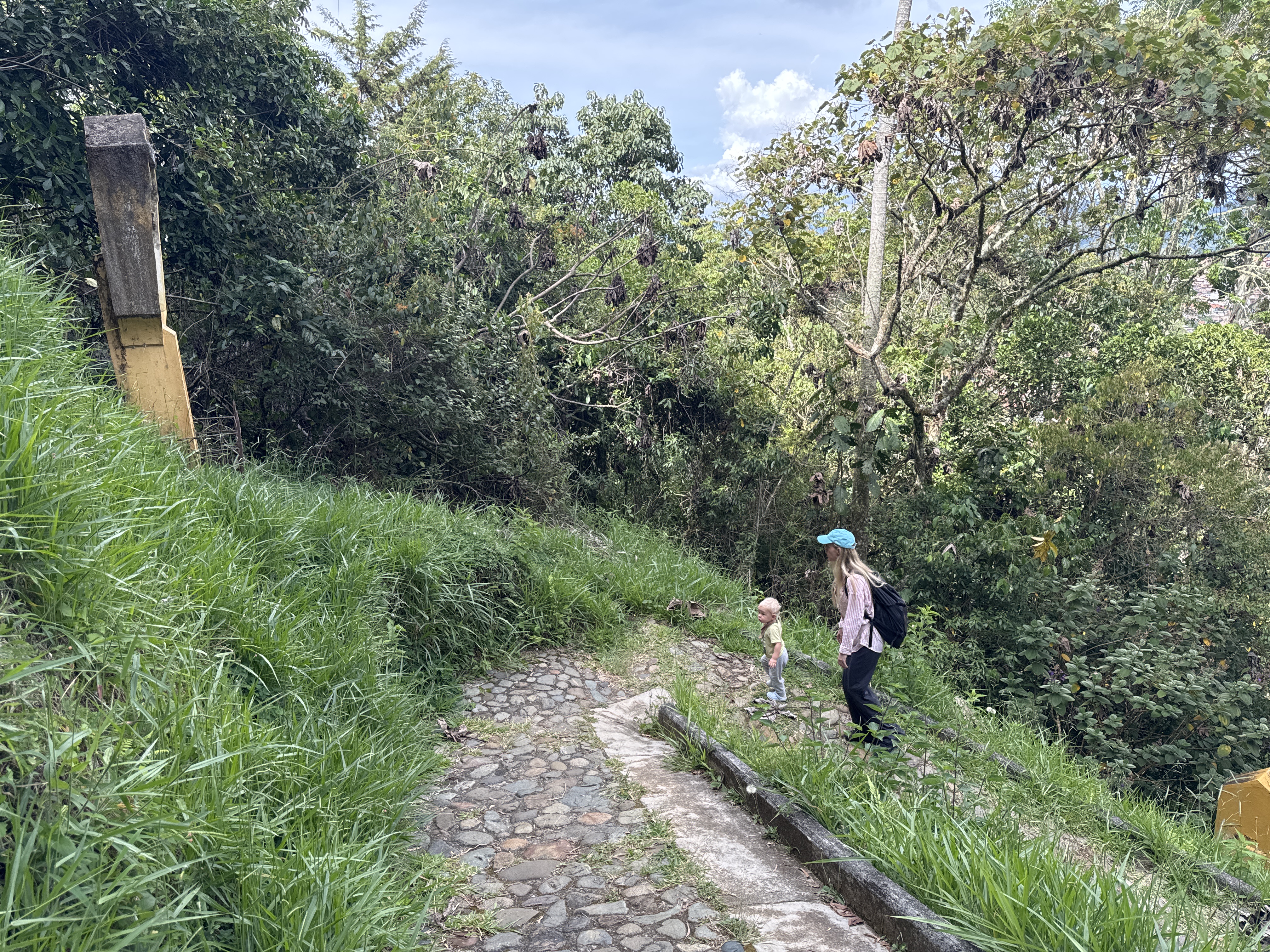
Hidden along the winding stone paths of Jericó, this quiet trail leads to the Grotto of the Immaculate Conception, a site that perfectly captures why this town is known as the "Athens of Southwest Antioquia." In this deeply traditional corner of Colombia, the landscape is intentionally woven together with religious devotion, turning a simple hike into a miniature pilgrimage.
Jericó is the birthplace of Santa Laura Montoya, Colombia’s first saint, and this heritage permeates the town's geography. Paths like these were originally built not just for transit, but as a way to invite contemplation. The yellow stone markers seen along the trail are part of a series of stations or devotional markers common in the region, reflecting the colors of the Vatican flag—yellow and white—which are frequently used throughout the town to signify its strong Roman Catholic identity.
What makes this area particularly interesting to an outside observer is the blend of "Paisa" culture and religious fervor. The "Paisa" region, which includes Antioquia, is famous for its industriousness and its rugged, mountainous terrain. Locals view the preservation of these shrines within the lush, semi-tropical forest as a point of pride, maintaining a balance between the wild Andean vegetation and their spiritual cultural heritage. The grotto at the end of this path is a modest, carved-out space in the rock, typical of the "Marian" devotion found throughout the Andes, where natural features like caves and springs are often dedicated to the Virgin Mary. Walking these paths provides a window into the daily life of Jericoanos, where faith isn't just practiced in the town's many cathedrals, but is something encountered naturally while walking through the mountains.
The Way of the Cross in Jericó
The town of Jericó is one of Colombia’s sixteen "Pueblos Patrimonios" (Heritage Towns), renowned for its deep-rooted Catholic identity. This path leads to the **Gruta de la Inmaculada**, a grotto dedicated to the Virgin Mary. Jericó is the birthplace of Santa Laura Montoya, Colombia’s first saint, and the local culture is heavily influenced by "Paisa" Catholicism—a syncretism of strict Spanish colonial religious tradition and rugged mountain agrarian life.
The yellow concrete markers along the trail are part of a **Via Crucis (Way of the Cross)**. These stations allow pilgrims to pause and meditate on the Passion of Jesus. In rural Antioquia, such shrines serve a dual purpose: spiritual devotion and territorial marking. Historically, placing religious icons on mountainsides was a way for the Church to "consecrate" the wild, untamed landscape. Jericó itself is often called the "Athens of the Southwest" because of its high concentration of religious art, seminaries, and its role as a cultural hub for the coffee-growing region.
The Sacred Trails of Jericó
Jericó is known as the "Athens of Southwest Antioquia," highly regarded for its deep-rooted Catholicism and as the birthplace of Mother Laura Montoya, Colombia's first saint. This path leads toward the Gruta de la Inmaculada (Grotto of the Immaculate Conception), a site typical of Paisa culture—a regional identity in northwest Colombia defined by colonial conservatism, industriousness, and intense Spanish-Catholic heritage.
The surrounding lush vegetation is part of the Andean cloud forest ecosystem. Unique to this region are two cultural icons: the *Carriel*, a traditional leather accordion-folded shoulder bag worn by muleteers (*arrieros*), and the brightly painted *Chiva* buses. Locally, the mountain economy is built on coffee and cardamom—Colombia is a top global producer of the latter, an aromatic spice often overlooked by tourists. The town itself is a rare example of preserved Republican-era architecture, where vibrant facades signify social standing and historical family lineages.