UG
Ulrich Gall
The Heart of Jericó’s Heritage
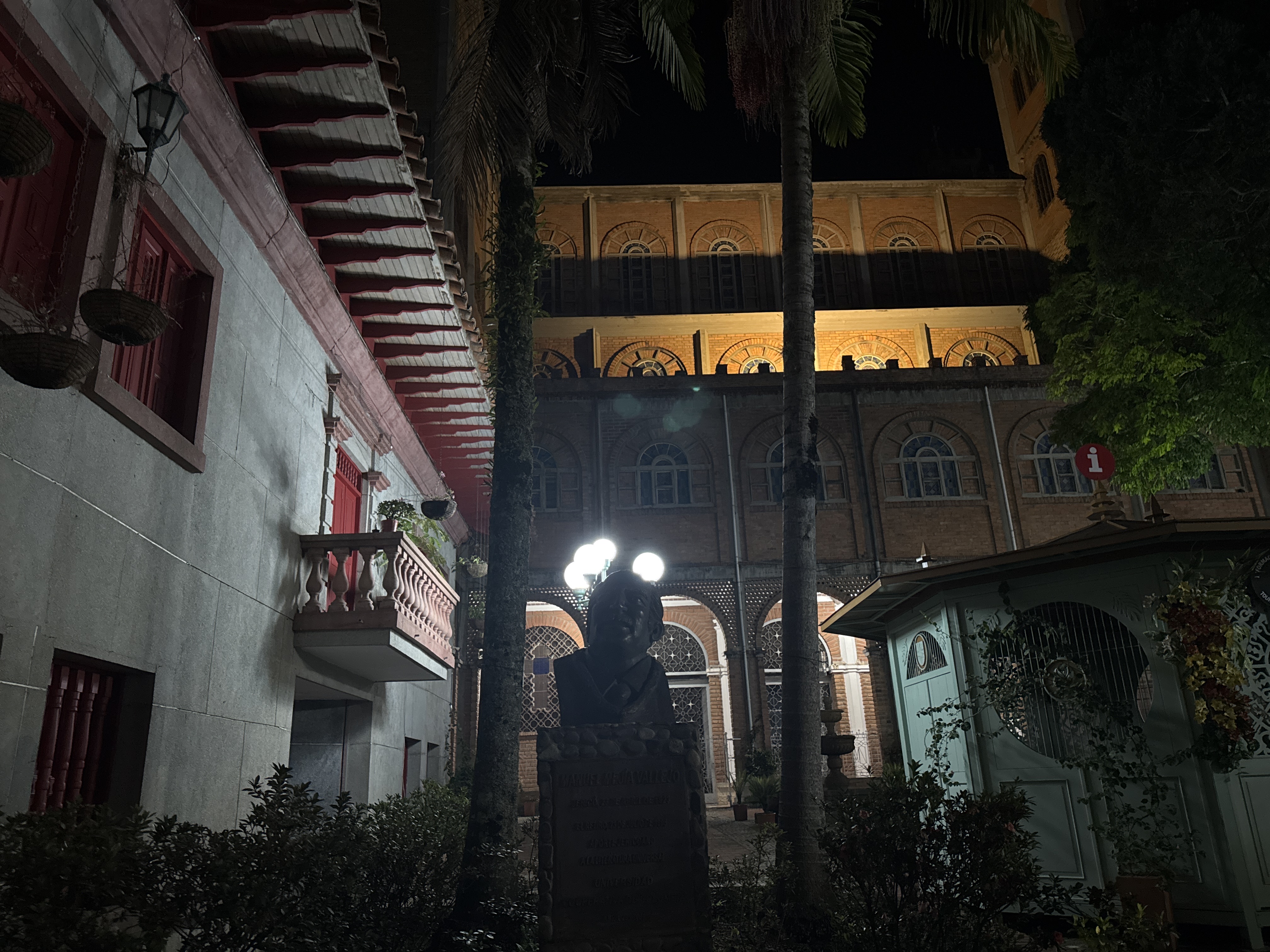
Deep in the mountains of Antioquia, Jericó is often called the "Athens of Southwest Colombia" because of its deep devotion to the arts and religious history. This courtyard is a quiet testament to that legacy, sitting in the heart of one of the country’s most preserved colonial heritage towns. One of the most fascinating aspects of this specific spot is its connection to the town’s famous artisan tradition: the Carriel. Jericó is the birthplace of this iconic leather satchel, a complex bag with many hidden compartments that is a national symbol of the "Paisa" culture.
The bust stands as a tribute to one of the figures who shaped the intellectual identity of the town. While many visitors are drawn to Jericó because it is the birthplace of Saint Laura Montoya—Colombia's first saint—the town is equally proud of its poets and musicians. The architecture surrounding the square features the classic "Paisa" style: heavy clay-tiled roofs and intricately carved wooden balconies painted in vibrant shades. These balconies weren't just for decoration; historically, they served as a social stage where residents could observe the village life below while maintaining their privacy.
The large, semi-circular brick arches in the background belong to the Cathedral of Our Lady of Mercies. Unlike many colonial churches built with white plaster, this cathedral is notable for its exposed reddish brickwork and Romanesque revival style, which gives the center of town a powerful, earthy aesthetic. At night, the lighting highlights the texture of these bricks, which were often fired in local kilns just outside the town limits.
If you look toward the small booth with the red "i" sign, you’re looking at a tourist information point designed to blend into the colonial aesthetic. It’s a reminder that while the town feels like a time capsule, it is a living community. The small potted plants and the lush greenery between the stone pathways are characteristic of the region's subtropical highland climate, where the "Eternal Spring" allows coffee, cardamom, and exotic flowers to bloom year-round in the surrounding hills.
The Literary Heritage of Jericó
Jericó is the birthplace of Santa Laura Montoya, Colombia's first saint, and this courtyard sits near the heart of its religious center. The bust honors Manuel Mejía Vallejo, one of Colombia's most significant 20th-century writers, born here in 1923. His work often explored the "Antioquian colonization," the rugged internal migration that shaped this region's culture.
The architectural style, characterized by brightly painted wooden balconies and red accents, is distinctive of the "Pueblos Patrimonial" (Heritage Towns) of Colombia. These designs evolved to manage the verticality of the Andes, using a technique called *tapia pisada* (rammed earth) and *bahareque* (bamboo and clay). The large brick structure in the background is the Cathedral of Our Lady of Mercy, reconstructed in the mid-20th century after an earthquake destroyed the original. The town remains a major hub for the production of the *carriel*, the iconic leather satchel worn by coffee farmers throughout the department of Antioquia.
The Literary and Religious Heart of Jericó
Jericó, Antioquia: a colonial village famous for its religious fervor and artisan leatherwork. The brick building is the Sanctuary of the Immaculate Conception, but the real local icon is the bust of Manuel Mejía Vallejo, one of Colombia's most influential 20th-century writers, born here in 1923. His work often explored the "Paisa" identity—the stoic, hard-working culture of the Andean region—and the brutal reality of rural violence.
Jericó is the birthplace of Saint Laura Montoya, Colombia's first saint; religious pilgrims flock here to see her relics and the many active convents. Look for the "Carriel," a complex, multi-compartmented leather satchel worn by traditional Highland farmers; it's the town's pride and features a "secret" compartment often used historically to hide letters, money, or even small weapons. The town’s 16 churches and intense Catholicism create a sharp contrast with its history of liberal intellectualism championed by writers like Vallejo.