
Elisabeth de Kleer
The Natural Pyramid of Cerro Tusa
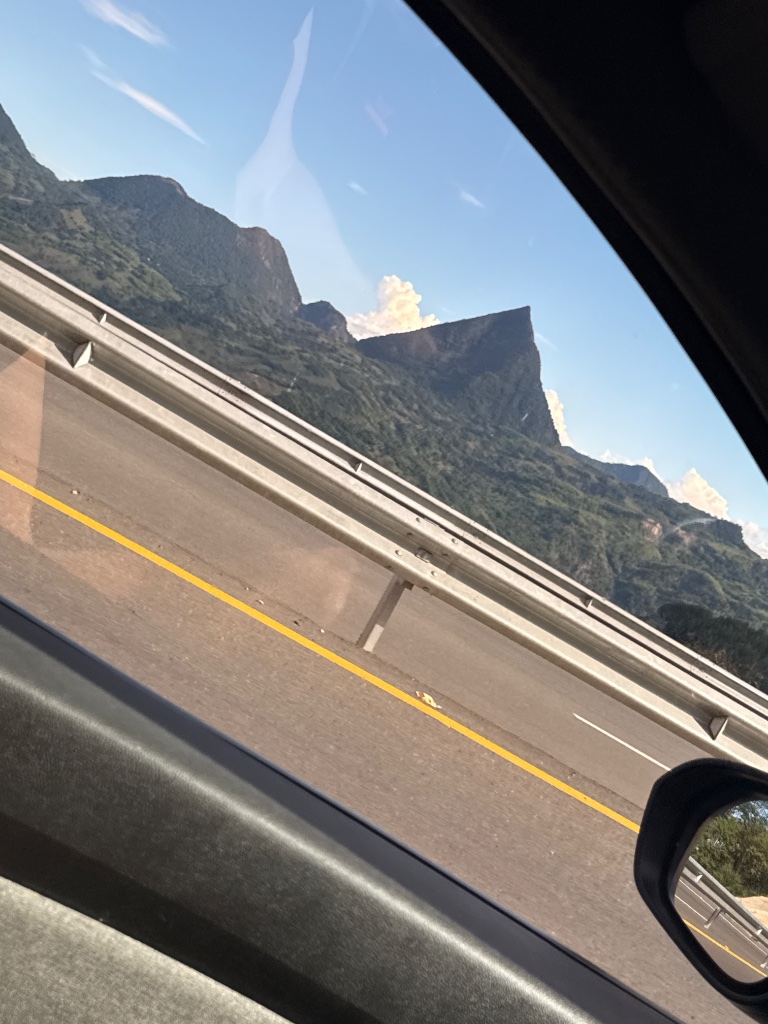
Looking at this landscape, one is struck by the monumental indifference of nature. Here, in the heart of Antioquia, looms the **Cerro Tusa**, a geological formation that defies the soft, rolling expectations of the horizon. It is a perfect, terrifying pyramid of earth and stone, rising nearly 600 meters from the base with a mathematical precision that seems almost spiteful.
The ancient Zenú and Nutabe peoples saw in this peak a sacred altar, a place where the earthly realm met the divine. They left behind "caracoles" and petroglyphs, perhaps in a futile attempt to negotiate with the overwhelming silence of the mountain. It stands as the largest natural pyramid in the world, a volcanic plug formed by the cooling of magma within the vent of an active volcano that has long since vanished, leaving only this stubborn, angular remnant.
While the modern traveler sees a scenic vista from the window of a moving vehicle, the mountain itself remains locked in a state of eternal, monumental boredom. It does not care for your photographs or your transit. It simply exists, a sharp green tooth jutting into the Colombian sky, reminding us that the earth is capable of geometry far more ancient and unforgiving than anything conceived by the hand of man. One could imagine a lone monk at the summit, staring into the abyss, realizing that the mountain has no intended meaning, only height.
Cerro Tusa: The Natural Pyramid
Cerro Tusa. World’s largest natural pyramid. Located in Venecia near Titiribí. Altitude: 1,850 meters. Not man-made; result of volcanic activity/uplift during the Miocene.
Sacred site for the Zenufaná people. Pre-Columbian "Diosa del Espejo" (Goddess of the Mirror) stone carved on its slopes. Ancient "Caminos de Piedra" (stone paths) served as pilgrimage routes. Local legends involve "El Putas de Aguadas," a folklore figure representing ultimate cunning/power. Hike is notoriously steep—45 to 60-degree inclines. Area historically central to Antioquia’s coffee culture. Rich in coal deposits; nearby Titiribí was once a booming 19th-century mining hub with a grand opera house, contrasting the rugged terrain.