UG
Ulrich Gall
The Pulse of Panama's Pacific Coast
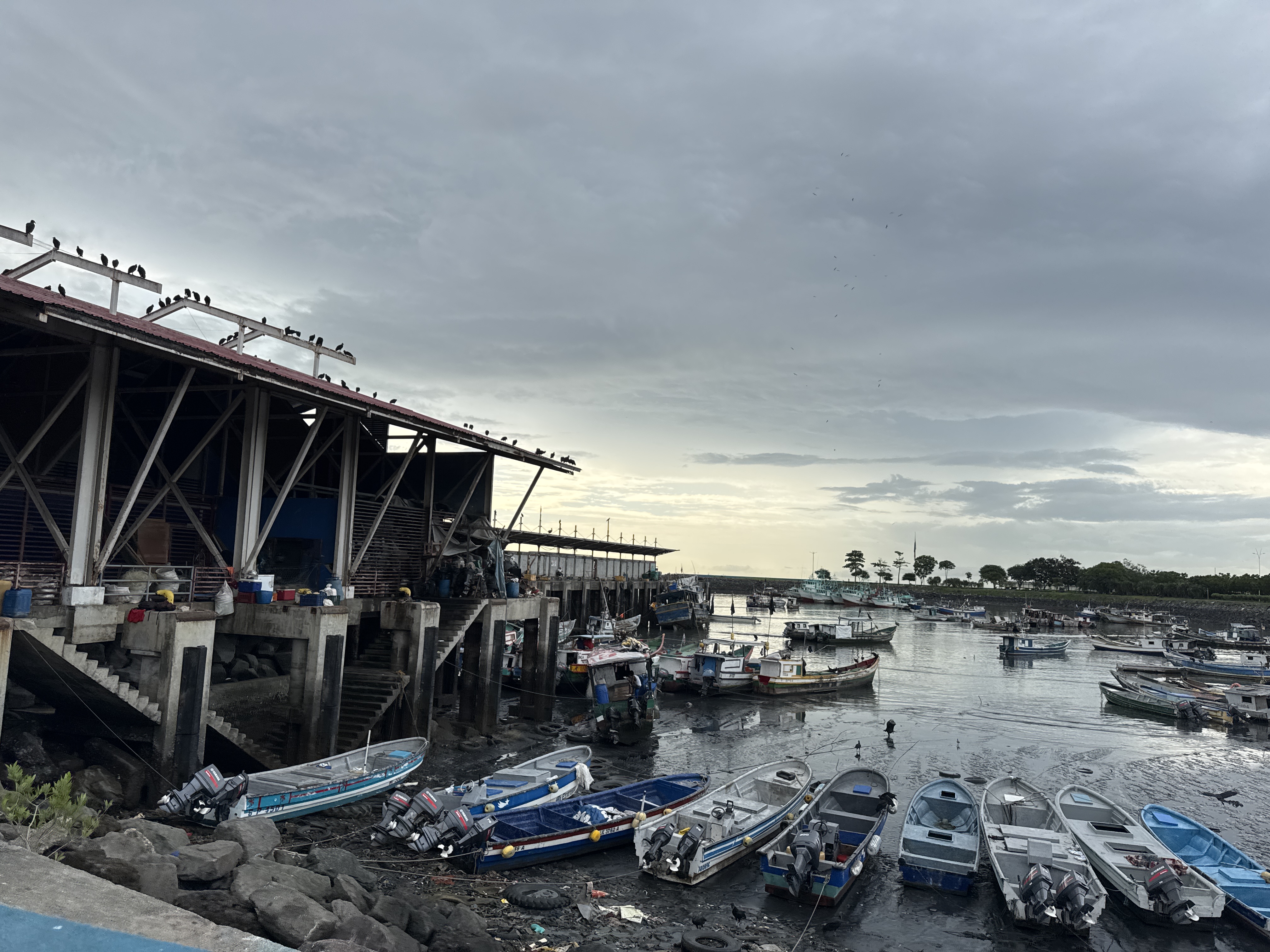
Panama City’s vibrant culinary scene starts right here, where the Pacific Ocean meets the edge of the historic district. While visitors often flock to the modern skyscrapers or the colonial charms of Casco Viejo, this bustling hub is the Mercado de Mariscos—the city’s famous fish market—and it serves as the literal engine of the local diet. One of the most striking things about this harbor is how the extreme tidal swings of the Pacific reveal a muddy, dark seabed twice a day, leaving these small artisanal fishing boats, known locally as "pangas," temporarily stranded or tethered in the muck.
If you look at the roof of the main structure, you’ll notice a large gathering of black birds. These are Black Vultures, and they are a permanent fixture of life here. While they might look a bit ominous to a newcomer, they play a vital role as the "clean-up crew" of the market, waiting patiently for scraps of fish discarded by the vendors.
This market was originally a gift from the Japanese government to Panama in the 1990s as a symbol of cooperation, which explains the efficient, industrial design of the buildings. Inside, the atmosphere is electric. Local fishermen bring in the daily catch—everything from giant tuna and snapper to corvina (sea bass)—which is then sold to both high-end chefs and local families. Along the outside of the market, you'll find a row of small stalls specializing in one thing: Panama’s national favorite, ceviche. Served in small plastic cups with crackers, it’s a refreshing mix of raw fish cured in lime juice, onions, and spicy peppers, often costing just a few dollars. It is perhaps the most authentic culinary experience in the city, bridging the gap between the hardworking maritime culture in the harbor and the upscale dining rooms just blocks away.
The Tidal Rhythms of Mercado de Mariscos
Panama City’s Mercado de Mariscos (Seafood Market) sits at the edge of the historic Casco Viejo and serves as the primary hub for the city’s artisanal fishing fleet. The black birds lining the roof are Black Vultures (*Coragyps atratus*), which act as a natural, albeit opportunistic, sanitation crew by scavenging fish offal discarded during the cleaning process.
The harbor here is subject to the dramatic tidal range of the Pacific Ocean, which can fluctuate by up to 6 meters (20 feet) twice daily. During low tide, the shallow basin drains almost completely, leaving the fleet of *pangas*—sturdy, open-faced fiberglass boats powered by outboard motors—situated directly in the mud. These vessels are the backbone of Panama's local seafood economy, supplying the market stalls inside with fresh Corvina (sea bass), red snapper, and the ingredients for the market’s famous ceviche.
Historically, this area connects the modern Cinta Costera waterfront with the working-class neighborhood of Santa Ana. While the market is a major tourist draw for its eateries, it remains a gritty, functional piece of industrial infrastructure where the catch is still hauled up manually via the concrete stairs during high tide.
Panama's Artisanal Pulsing Heart
Panama City’s Mercado de Mariscos represents a raw intersection of pre-colonial tradition and modern urban life. The small fiberglass "pangas" represent the artisanal heart of the country’s fishing industry; despite the high-tech canal nearby, much of the capital’s protein depends on these outboard-motor skiffs. The black birds lining the roof are Black Vultures (*Coragyps atratus*), nature’s sanitation crew. In Panama, they are colloquially called "gallinazos." They congregate here specifically to feast on offal tossed directly into the water after the morning’s catch is processed.
The mud visible beneath the boats highlights the massive Pacific tidal range—often exceeding 6 meters (20 feet)—which dictates the rhythm of the city. While the market is famous for $2-3 cups of *ceviche* (fresh raw fish cured in lime), look for *corvina* (sea bass) or *langostinos*. Local tip: the darker trade in these waters sometimes involves "white lobster"—slang for cocaine packages dropped by offshore go-fast boats and recovered by similar-looking skiffs, a persistent shadow economy in this transit hub.