UG
Ulrich Gall
The Vulture-Guarded Mercado de Mariscos
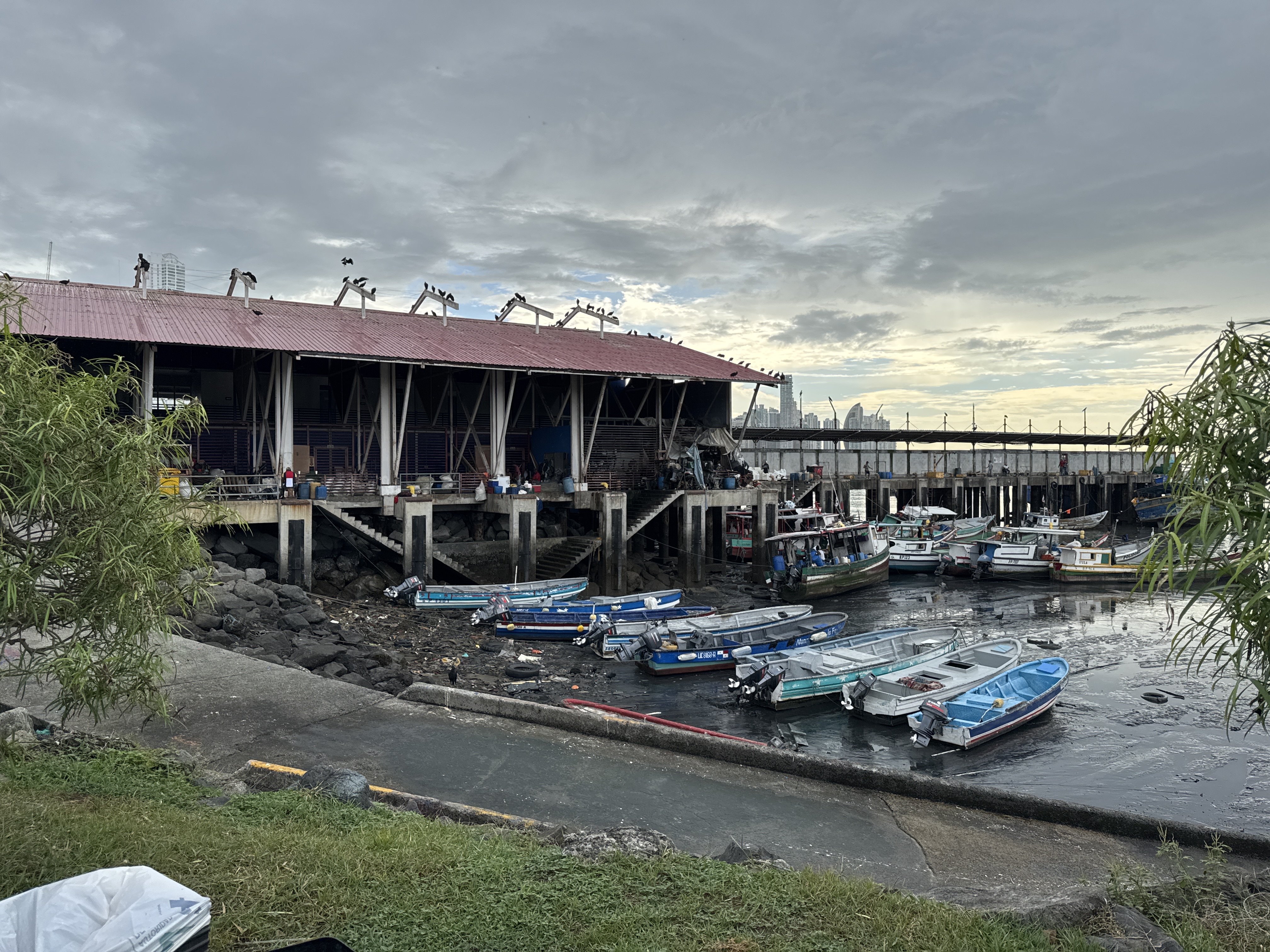
While Panama City is world-famous for the massive container ships crossing its canal, this unassuming open-air structure with the red roof represents the city's much more intimate relationship with the sea: the Mercado de Mariscos, or Seafood Market. The pier and the cluster of colorful wooden boats, often referred to as *pangas*, are the lifeline of this institution, where local fishermen bring in the daily catch just steps away from the historic Casco Viejo district.
What might seem unusual to a visitor are the dozens of black birds perched along the roofline. These are Black Vultures, known locally as *gallinazos*. In Panama City, they act as a natural, albeit slightly ominous-looking, cleaning crew. They congregate here specifically because the market is where the cleaning and gutting of fish happen in real-time; the vultures wait for scraps and offal, performing a vital ecological role by keeping the area free of organic waste.
The boats themselves are a hallmark of artisanal fishing in the region. Despite the gleaming skyscrapers of the modern banking district visible in the distance, these small-scale fishermen still navigate the Bay of Panama using traditional methods. If you were to walk into the building, you’d find dozens of stalls labeled with names like "Pescadería El Amigo" or "Delicias del Mar." Beyond raw fish, the market is most famous for its *ceviche*—fresh seafood cured in lime juice, onions, and chili peppers—served in simple styrofoam cups.
This location marks a cultural intersection where the working-class fishing traditions of the Santa Ana neighborhood meet the edge of the Cinta Costera, the city's premier waterfront parkway. It is one of the few places in the capital where the hyper-modern skyline and the gritty, authentic grit of daily Panamanian life exist in such close, functional proximity.
Panama City's Seafood Lifeblood
This is the Mercado de Mariscos (Seafood Market), the culinary heart of Panama City. Built with the assistance of the Japanese government in the 1990s, the facility serves as the primary hub for the city’s artisanal fishing fleet.
The small, brightly colored wooden boats docked here are "pangas." These vessels venture into the Bay of Panama daily, navigating extreme tidal swings that can exceed 5 meters (17 feet). During low tide, the boats often rest directly on the mudflats.
The birds congregating on the red roof are Black Vultures (Coragyps atratus). In Panama City, they act as a natural waste management system, scavenging fish offal discarded during the cleaning process. While seen as pests elsewhere, they are integral to the market's ecosystem. Inside, the market is famous for "ceviche," a dish of raw fish cured in lime juice, salt, and chili, traditionally served here in styrofoam cups with crackers.
Panama's Maritime Mud and Markets
Mercado de Mariscos (Seafood Market) dock. Epicenter of Panama City’s daily catch. The red-roofed structure serves as the primary wholesale hub. Small fiberglass panga boats (pangas) dominate the shoreline, favored for their shallow draft and durability in the Gulf of Panama.
Note the extreme tidal range: the Pacific side of Panama experiences dramatic 15-20 foot (5-6 meter) tide fluctuations twice daily. At low tide, boats ground in the mud or must wait for the surge. Vultures (coragyps atratus) lining the roof are a permanent fixture, scavenging fish guts discarded by vendors. While the front-facing market is a tourist staple for Corvina (sea bass) ceviche, this rear side is the "real" industrial soul where fishermen dodge black market oil runoff and heavy pollution to unload red snapper, octopus, and shrimp. The smell of brine, diesel, and rot is characteristic of the Santa Ana waterfront.