UG
Ulrich Gall
El Nazareno Bird Market
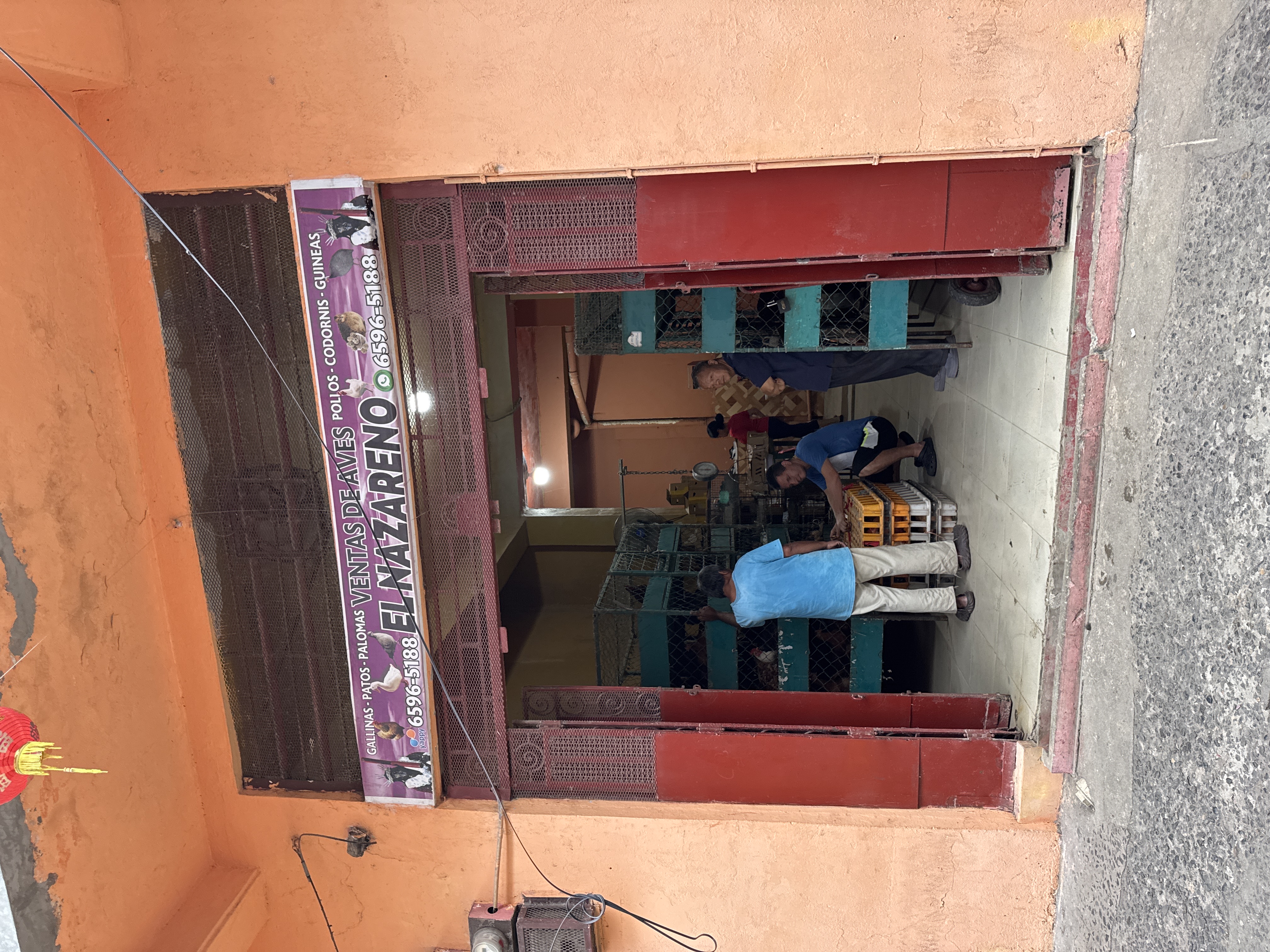
While this might look like a simple poultry shop, it is a fascinating intersection of Panama City's history and its diverse cultural traditions. This establishment is located in Panama City's Barrio Chino, or Chinatown, and the name on the sign, "El Nazareno," refers to the Christ of Portobelo, one of the most revered religious figures in Panama. This blending of Chinese commerce with deeply rooted local Catholic symbolism is a hallmark of the Panamanian identity.
The shop is a traditional *Venta de Aves* (Bird Sale), a common sight in older Latin American neighborhoods but increasingly rare in modern urban centers. The sign lists a variety of feathered livestock: *gallinas* (hens), *patos* (ducks), *palomas* (pigeons/doves), *pollos* (chickens), *codornis* (quails), and *guineas* (guinea fowl). Travelers from Europe or North America might find it unusual to see live animals sold in such a small, open-fronted urban storefront, but for many locals, this is the preferred way to ensure meat is perfectly fresh and of high quality.
Beyond the culinary uses, shops like this often serve a dual purpose. In this region, pigeons and chickens are sometimes purchased for use in Afro-Caribbean and Santería spiritual practices, which have a presence throughout the Caribbean basin, including Panama. The birds are kept in the stacked turquoise crates you see inside, and they are typically weighed on the traditional hanging scale visible near the back before purchase.
Seeing a shop like El Nazareno provides a glimpse into the daily life of the Santa Ana district, a neighborhood that sits right on the edge of the more famous Casco Viejo. While the tourist areas are becoming more polished, this area remains a lived-in, hardworking community where traditional ways of shopping—connecting directly with the source of your food—remain the norm.
Live Poultry and Spiritual Sacrifice in Barrio Chino
This is a traditional live poultry market in Panama City’s Barrio Chino (Chinatown). The shop name, "El Nazareno," refers to the Christ of Portobelo, a revered black statue of Jesus in Panama, illustrating the syncretism of Catholic and Afro-Panamanian culture central to the nation's identity.
Establishments like this are a cornerstone of both Santería and Palo Monte practices in Panama. These Afro-Caribbean religions often require the ritual sacrifice of specific birds—hens (gallinas), pigeons (palomas), or guinea fowl (guineas)—to appease deities known as Orishas or to perform cleansings (*limpiezas*). The presence of the "Cristo Negro" imagery on the signage serves as a coded signal to practitioners, as the saint is often syncretized with powerful spiritual entities. While these shops provide fresh meat for culinary use, their primary urban economic niche is supplying live animals for these complex, often misunderstood spiritual ceremonies.
Live Poultry for Soul and Stomach
Ventas de Aves El Nazareno is a live poultry market in Panama City’s Barrio Chino (Chinatown). Unlike Western supermarkets, shops like this cater to Santería practitioners and traditional cooks who require birds to be slaughtered fresh or kept alive for specific rituals.
The inventory list on the sign—*gallinas* (hens), *patos* (ducks), *palomas* (pigeons), and *guineas* (guineafowl)—hints at its diverse clientele. In Santería, a syncretic religion widespread in the Caribbean and Panama, these birds are essential sacrifices to different Orishas (deities). Pigeons, for instance, are often offered to Obatalá for peace or health.
The name "El Nazareno" references the Black Christ of Portobelo (*Cristo Negro*), Panama's most revered religious icon, symbolizing a fusion of Catholic and Afro-Panamanian belief systems. Customers here aren't just buying dinner; they are often purchasing the central element of a spiritual cleansing (*ebbó*).