UG
Ulrich Gall
The Cantonese Heart of Panama's Barrio Chino
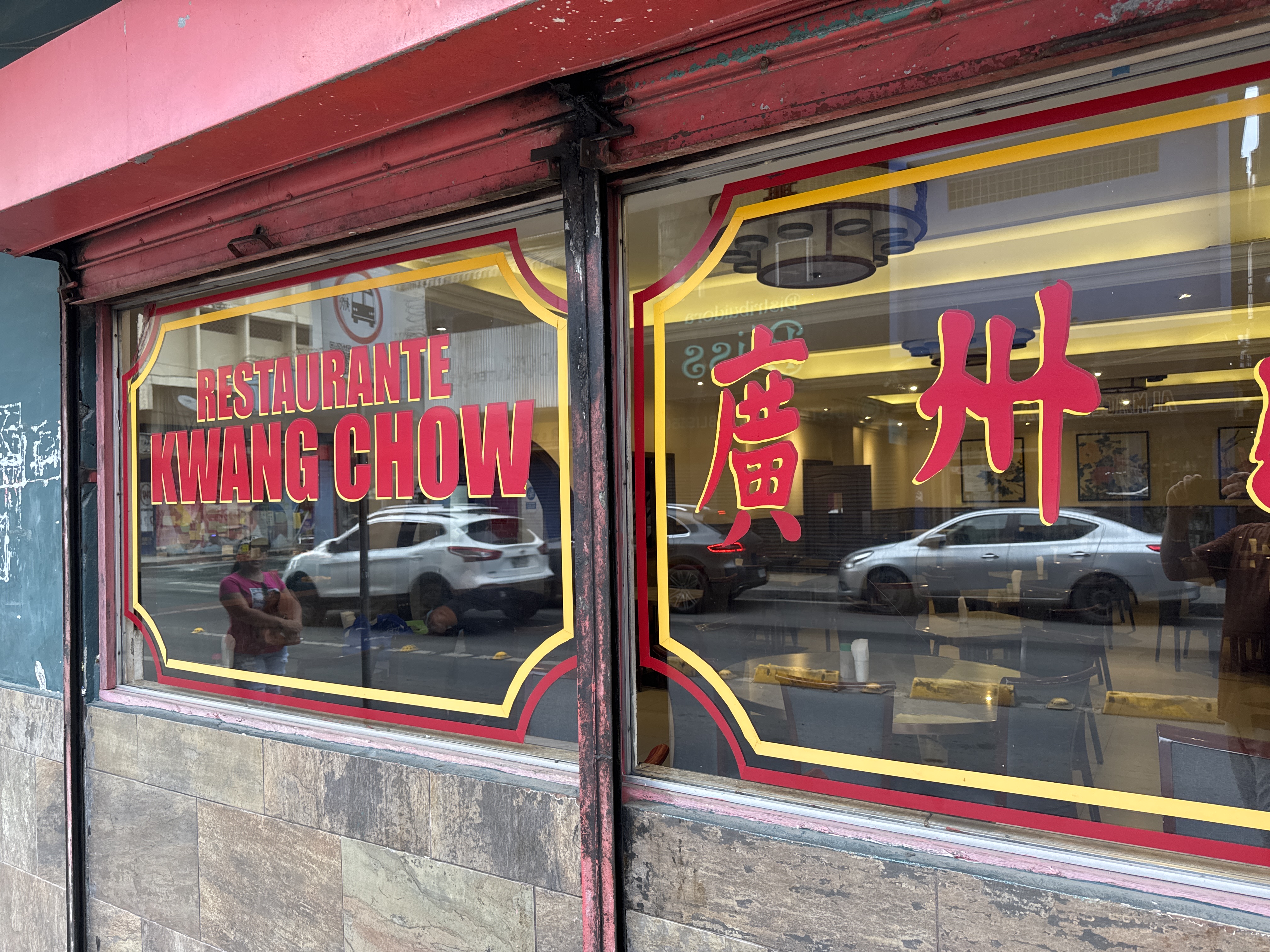
Panama City is home to one of the oldest and most influential Chinese communities in Latin America, a history that is vividly etched into the landscape of the "Barrio Chino" or Chinatown. This specific spot, the Kwang Chow restaurant, serves as a living landmark of that migration. The large red characters on the window, 廣州, are the traditional Chinese characters for "Guangzhou," a major port city in southern China formerly known in the West as Canton.
The story of the Chinese in Panama is deeply intertwined with the construction of the global trade routes you see today. The first major wave of Chinese laborers arrived in the mid-19th century to help build the Panama Railroad, and later, thousands more arrived to work on the French and American versions of the Panama Canal. Many of these workers originated from the Guangdong province, which explains why so many businesses here bear the name "Kwang Chow" or "Canton."
While the neighborhood of Santa Ana might look like a typical bustling urban district, the presence of these restaurants highlights a unique culinary fusion found only in Panama. Here, the local diet has been heavily influenced by Cantonese cooking; it is perfectly normal for Panamanians of all backgrounds to eat "Desayuno Chino" (Chinese Breakfast/Dim Sum) on Sunday mornings. The use of Traditional Chinese characters on the signage, rather than the Simplified characters used in mainland China today, reflects the deep roots of this diaspora community, many of whom arrived well before the script reforms of the mid-20th century. Today, the Chinese population in Panama is estimated to be around 5% of the total population, and their cultural imprint on the country's commerce and cuisine is one of the strongest in the Western Hemisphere.
The Cantonese Legacy of Panama’s Barrio Chino
Panama City’s Barrio Chino (Chinatown) dates back to the mid-19th century, following the arrival of Chinese laborers to build the Panama Railroad and later the Canal. Restaurante Kwang Chow is a fixture in this historic district, specializing in Cantonese cuisine. "Kwang Chow" is an older romanization of Guangzhou (Canton), the capital of Guangdong province, where the majority of Panama’s ethnic Chinese population originates.
A unique cultural fusion in Panama is the ubiquity of Chinese-run neighborhood convenience stores, known locally as "chinos." Because of the high volume of immigrant-owned businesses, Panama has a distinct Cantonese dialect subculture. In establishments like this, you will often find traditional Dim Sum—locally called "desayuno chino"—which is a mainstream Sunday ritual for Panamanians of all backgrounds, not just the Chinese community.
The Cantonese Heart of Panama City
Founded in Casco Antiguo's Barrio Chino, Restaurante Kwang Chow is a hallmark of Panama’s deep-rooted Chinese community. The Chinese (mostly Cantonese) arrived in the mid-19th century for the transcontinental railroad and later the Canal construction. Consequently, Panama has the largest Chinese population in Central America.
The restaurant’s name and characters 廣州 (Guǎngzhōu) refer to the capital of Guangdong province, the ancestral home of most Panamanian Chinese. This specific diaspora created "Chino-Panameño" cuisine—a fusion where traditional Cantonese techniques meet local ingredients. A local ritual is Sunday morning Dim Sum (called *desayuno chino*), which is so integrated into Panamanian culture that it’s often preferred over traditional Latin breakfast. Panama remains one of the few places in the Americas where traditional Cantonese characters are ubiquitous on street corners, reflecting a community that has maintained its linguistic and culinary identity for over 170 years despite historical periods of discriminatory nationalism.