UG
Ulrich Gall
Hillside Castle-Inspired Water Gardens in Lima Suburb
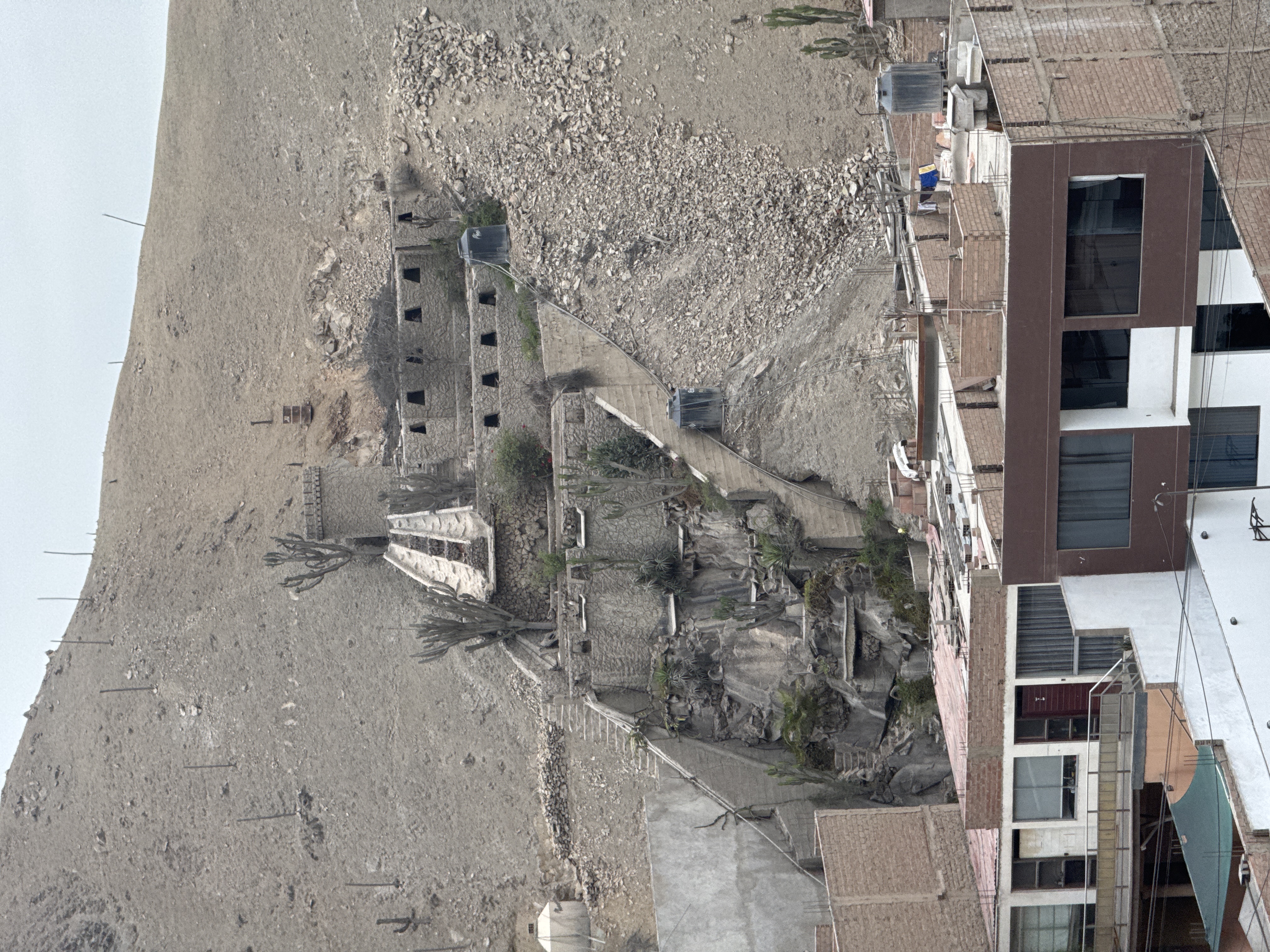
What immediately draws the eye in this landscape is not just the imposing, dry hillside, but a fantastical structure carved into its lower slopes, reminiscent of a medieval castle with its turret, walls, and what appear to be mock battlements. However, this isn't an ancient ruin, but rather an intriguing and somewhat whimsical, multi-tiered water feature designed to bring greenery and a sense of artistry to an otherwise barren environment.
Nestled into the arid terrain, this elaborate construction looks like a series of waterfalls and terraces, complete with steps winding up the hill. The "castle" elements might be purely decorative, creating an unexpected architectural flourish in a residential area. You can see various cactuses, likely chosen for their drought resistance, that have been integrated into the design, further enhancing its unique character. This kind of creative landscaping is a way residents often personalize and beautify their immediate surroundings, especially in areas where natural vegetation is sparse.
Looking beyond this singular structure, you'll notice many of the buildings below are still under construction or appear to be in various stages of completion. That's a common sight in parts of Lima, like Santiago de Surco. It’s not unusual for families to build their homes incrementally, adding new floors or sections as finances allow. This approach to construction means that many homes might go years without their final finishing touches, with exposed brick and rebar a familiar part of the urban landscape. You can also spot plastic water tanks on the rooftops of some lower buildings, which are essential in areas where direct municipal water supply might be intermittent or insufficient, allowing residents to store water for daily use. This blend of evolving architecture and pragmatic infrastructure truly captures a slice of life in this part of Peru.
Informal Water Management in Lima's Hills
The "waterfall" structure on the hillside isn't a natural formation, but rather a man-made system designed to manage water in this arid, hilly area. In many informal settlements around Lima, these types of gravity-fed systems, often fed by cisterns or trucked-in water, are crucial for providing water to homes built on difficult terrain. The structures are often built incrementally by residents. The apparent stylistic choices, like the castle-like tower and decorative channels, reflect a unique blend of practical necessity and community effort to create something visually appealing in challenging conditions.