UG
Ulrich Gall
Informal Settlements on Lima's Hillsides
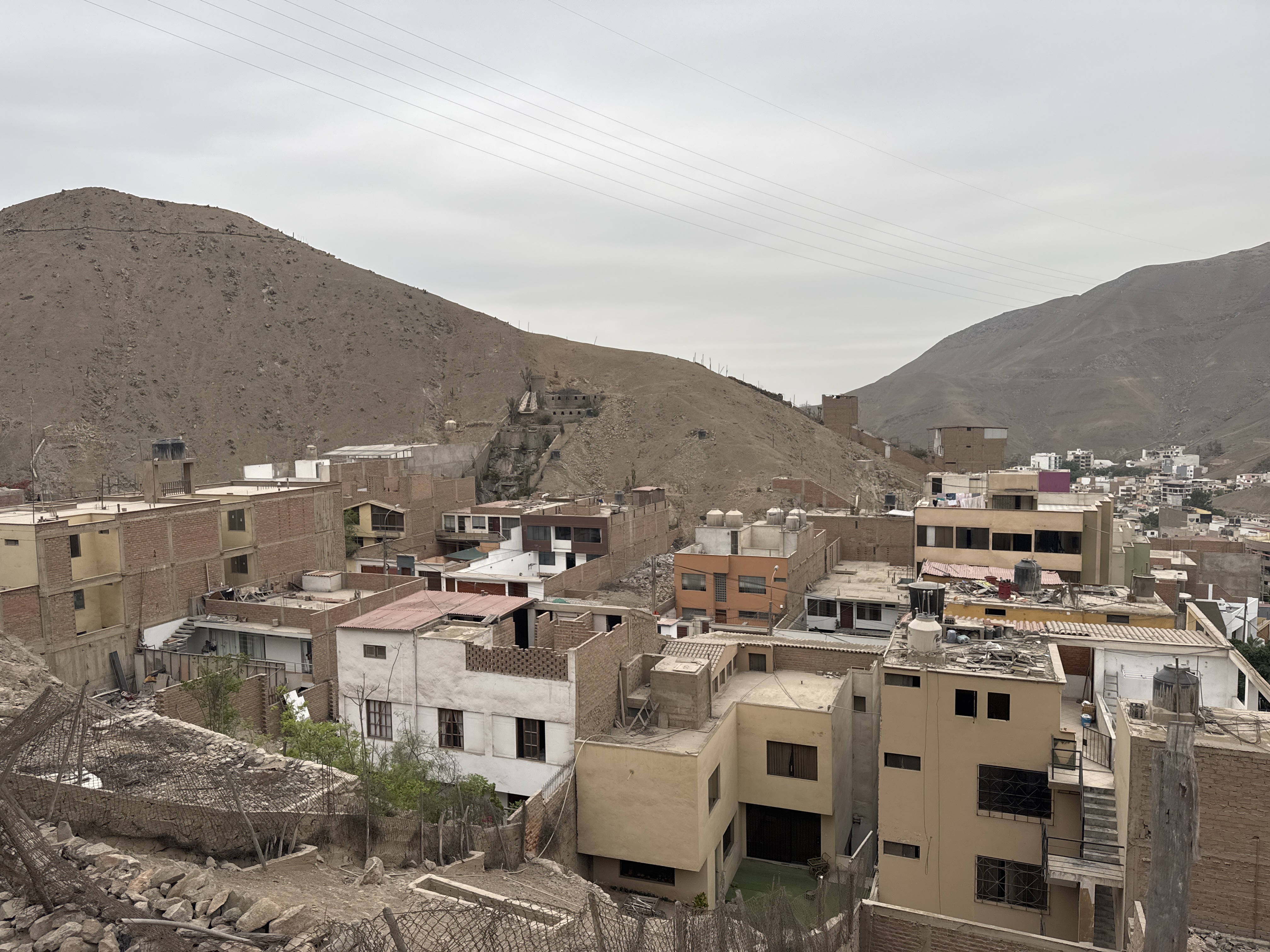
What might look like an endless expanse of homes sprawling up the hillsides of Lima is actually a dynamic testament to the city's unique relationship with its geography and rapid urbanization. Unlike many cities where expansion is meticulously planned, a significant portion of Lima's growth, particularly in areas like Surco, has been organic, with communities building upwards on the slopes of the Andean foothills that encircle the city.
The unpainted brick and rebar structures you see are a common characteristic of Peruvian informal settlements, known as *pueblos jóvenes* (young towns), or more formally, *asentamientos humanos* (human settlements). These areas often begin with families occupying vacant land, sometimes through organized land invasions, and then incrementally building their homes as resources allow. This process means that many houses remain unfinished for extended periods. There's a practical reason for this: in some cases, leaving rebar exposed on the roof indicates an intention for future expansion, allowing families to avoid higher property taxes that would be levied on a "finished" structure. It's a pragmatic approach to homeownership where flexibility and future growth are built right into the architecture.
The hills themselves are part of the coastal desert, which means they are naturally arid and rocky, explaining the stark, brown landscape. The dense arrangement of homes, often without much green space, reflects the high demand for housing in a rapidly growing metropolitan area. The lines crisscrossing the sky are typical of power lines, delivering electricity to these burgeoning communities, a crucial infrastructure that often follows the initial settlement. What may appear chaotic to an outsider is, in fact, a vibrant, evolving urban fabric, showcasing the resilience and ingenuity of its residents in creating homes and communities in challenging environments.
Lima's Informal Settlements and Self-Built Homes
This scene illustrates the informal growth patterns common in the hills surrounding Lima, Peru. "Pueblos jóvenes" (young towns) are self-built neighborhoods, often developed by migrants seeking better opportunities. Many start as invasions of unoccupied land, with residents gradually building homes, often brick-by-brick, and lobbying for essential services like water, electricity, and roads. The unpainted brick, exposed rebar, and water tanks on rooftops are typical visual markers of this ongoing construction process, reflecting a continuous state of improvement and expansion.