UG
Ulrich Gall
The Existential Crisis of the Crumb
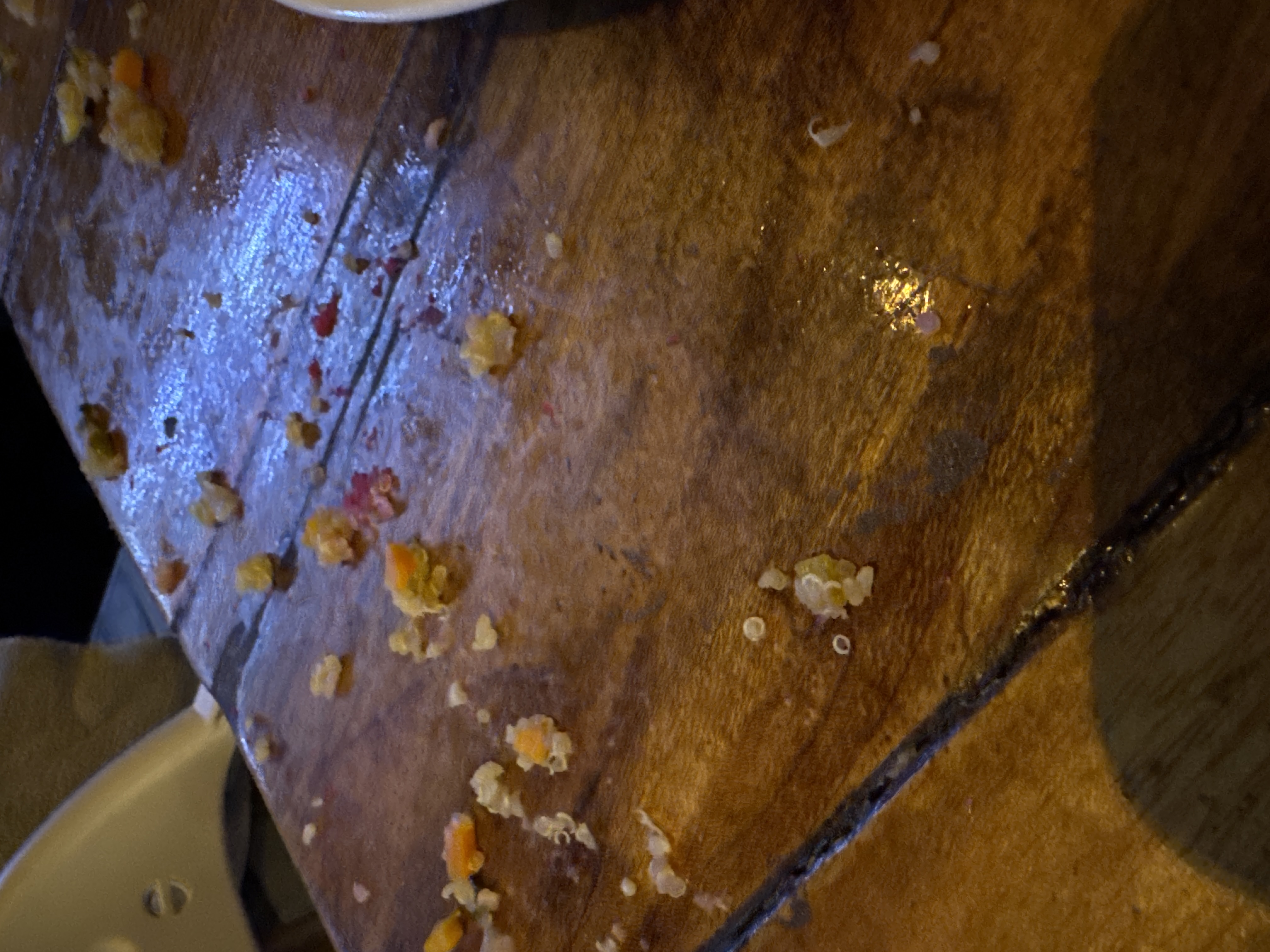
Ah, yes. Here we see the detritus of human consumption, scattered across a wooden plane. A microscopic battlefield, perhaps, where forgotten morsels lie exposed to the harsh indifferent light. Each speck, once part of a grander meal, now merely a testament to an appetite fulfilled, or perhaps, too quickly abandoned. The light, it dances upon the wet sheen, reflecting a transient world of fleeting pleasures and the inevitable aftermath. Observe the varied textures, the faint hues, once vibrant, now fading into the wood grain. This is not merely a table; it is a canvas inscribed with the intimate, often barbaric, narrative of sustenance. A fleeting moment, captured in this random scattering of forgotten crumbs and droplets, speaks of the hunger that drives us, and the brief satisfaction that follows. One contemplates the immense effort to bring these disparate elements together, only for them to disintegrate into this chaotic beauty. It is the existential crisis of the crumb.
Remnants of a Panamanian Raspado
While this might just look like a messy table after a meal, the tiny, colorful bits scattered across it could be more fascinating than you think. In Panama, and particularly in Bocas del Toro where you are, these little crumbs might be remnants of a vibrant and beloved local dessert known as *raspado*.
*Raspado* is a classic Panamanian shaved ice dessert, often compared to snow cones or Hawaiian shave ice. However, what makes *raspado* distinct are the toppings, which are usually incredibly colorful, fruit-based syrups, sometimes homemade. The small, irregular, and brightly colored pieces you see, especially the yellow, orange, and reddish ones, are highly suggestive of fruit pulp or small chunks of fruit that are often added to the syrups, or even condensed milk or fruit jellies, which solidify a bit when they hit the cold ice. It’s a treat that local vendors prepare on the spot, scraping ice from a large block and then dousing it with these sweet, often intensely flavored concoctions. It's not uncommon for some of these delicious, sticky remnants to end up on the table, a testament to the enjoyment of the dessert.
Mysterious Roe from the Caribbean Sea
The interesting elements scattered on the wooden surface are most likely fish eggs (roe) or caviar, specifically from a local fish commonly served in this region. Given the tropical marine environment of Bocas del Toro, these could be from various species. The small, often translucent and sometimes colorful nature of the eggs is characteristic. Consuming roe is common across many cultures, celebrated for its unique texture and ocean flavor.