UG
Ulrich Gall
Lima Coastal Architecture and Urban Infrastructure
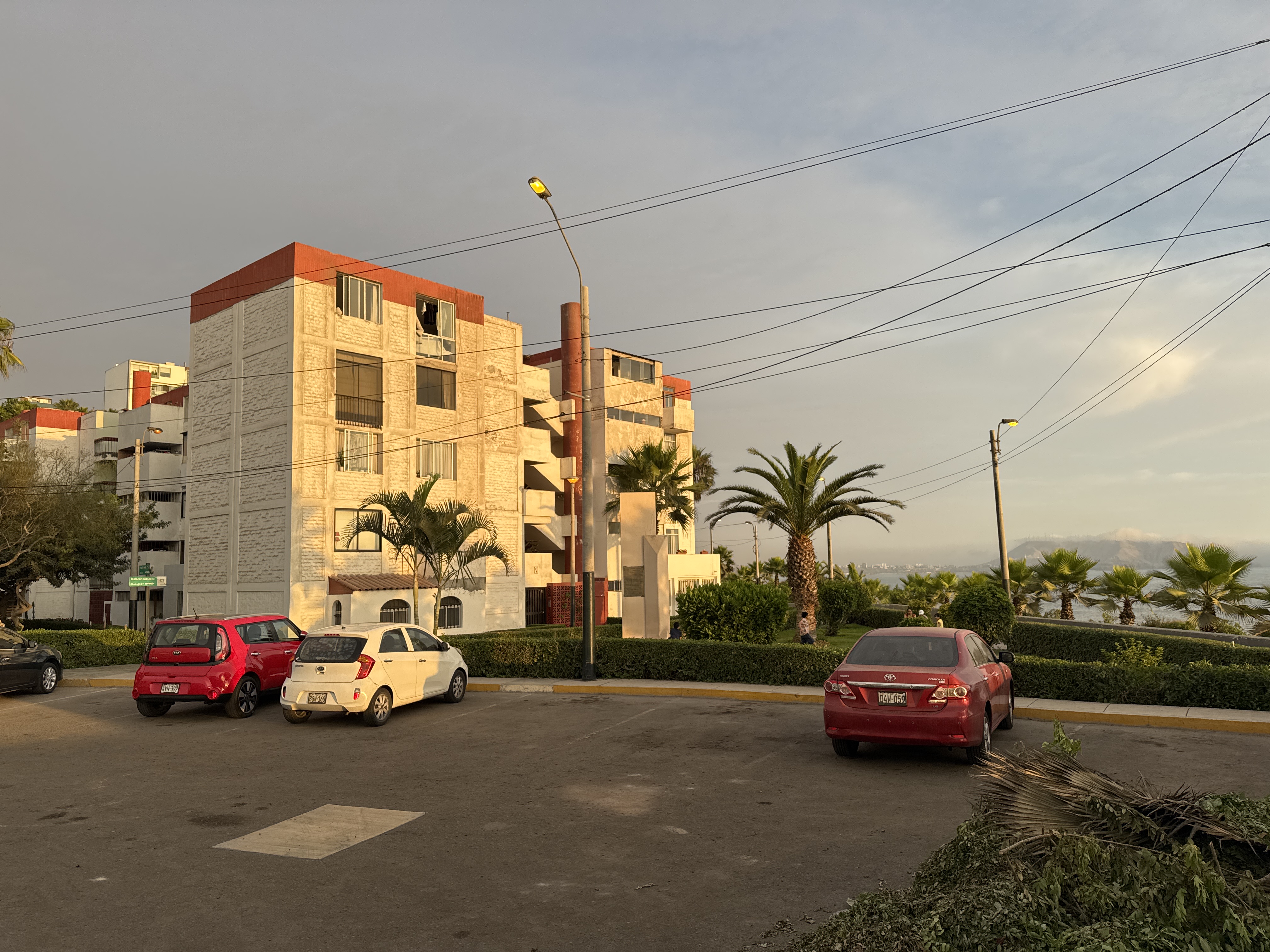
The architectural style of the building you see, with its stark, textured facade and flat, reddish-orange roof-line, is quite characteristic of many residential buildings constructed in coastal Latin American cities, particularly in Peru, from the mid-20th century onwards. These structures often feature a blend of modernism with regional adaptations, designed to withstand the local climate and seismic activity.
What might catch your eye is the visible tangle of overhead electrical wires crisscrossing the sky. This dense network of power lines is a very common sight in many urban areas across Peru and other developing nations. Unlike in many European or North American cities where utility lines are often buried underground, the cost and infrastructure challenges in these regions often lead to above-ground installations. While it might look a bit messy, it's a practical and widespread solution for delivering electricity.
The setting itself, with palm trees and a glimpse of what appears to be a coastal landscape in the distance, further grounds this scene in Lima, a sprawling metropolis that hugs the Pacific Ocean. The city's unique coastal desert climate, often characterized by a persistent hazy or cloudy sky from April to December, known as "garúa," can create atmospheric lighting conditions, like the golden glow illuminating the building right now. These coastal slopes, where this image was captured, are often developed with residential buildings that enjoy views of the ocean, highlighting the blend of urban life with natural beauty that defines much of Lima's charm.
Lima Coastal Architecture and Urban Scene
This building, with its distinctive textured facade and contrasting red roof elements, reflects a common architectural style seen in coastal urban areas of Peru, particularly in districts like Magdalena del Mar. The design, often featuring a blend of modern influences with local adaptations, uses materials that can withstand the humid, salty air near the Pacific Ocean. The abundance of parked cars is typical for residential areas in Lima, where personal vehicles are a primary mode of transport. The prominent overhead electrical and communication wires are also characteristic of many South American cities, a stark contrast to the often subterranean infrastructure in Europe and North America. In the background, the rising terrain signals the city's unique geography, extending from the Pacific coast up into the Andean foothills, often enveloped by a coastal fog known as *garúa* during certain seasons, which influences the sky's appearance here.