UG
Ulrich Gall
Peruvian Seafood Menu Blackboard
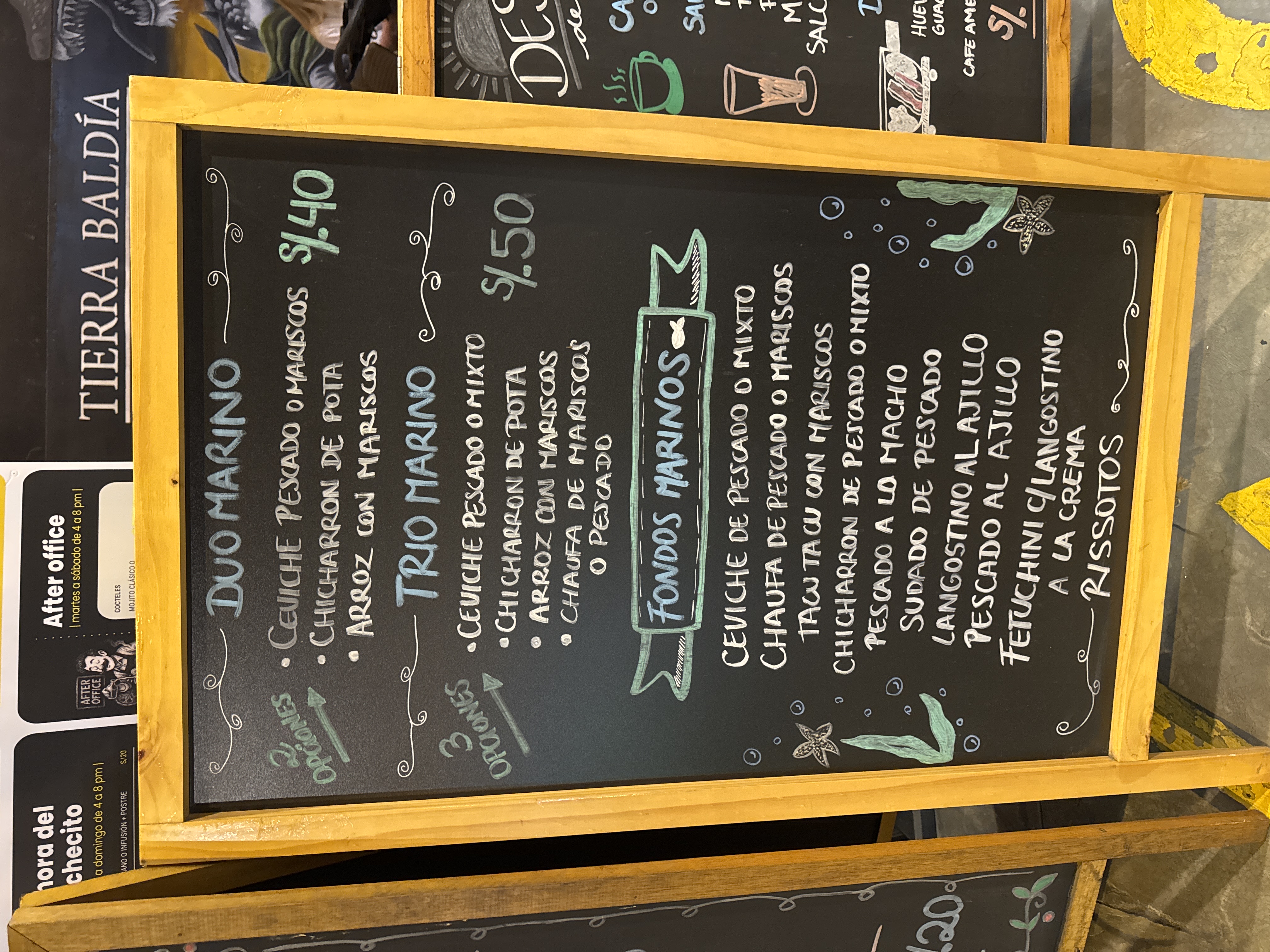
The blackboard in front of you is a vibrant display of Peruvian culinary offerings, specifically highlighting seafood dishes. This kind of menu board is a common sight in restaurants and smaller eateries across Peru, designed to attract passersby with daily specials or popular items.
Let's break down some of the fascinating dishes listed here, starting with the pricing. You'll notice prices like "S/.40" and "S/.50." The "S/." stands for "Sol," which is the official currency of Peru. The amounts indicate 40 and 50 Peruvian Soles, respectively.
Right at the top, you see "Duo Marino" and "Trio Marino." "Marino" means "marine" in Spanish, referring to seafood. These are popular platter options. The "Duo Marino" offers two choices: *Ceviche Pescado o Mariscos* and *Chicharrón de Pota*. Ceviche is a national dish of Peru, typically raw fish (pescado) or seafood (mariscos) marinated in lime juice, spiced with chili, and often served with sweet potato and corn. *Chicharrón de Pota* refers to fried pieces of squid. "Pota" is a type of large squid that's very common in Peruvian cuisine, often served crispy. The third item in the Duo is *Arroz con Mariscos*, which translates to rice with seafood, a flavorful dish similar to paella.
The "Trio Marino" offers three choices, expanding on the Duo with *Chaufa de Mariscos o Pescado*. *Chaufa* is a Peruvian-Chinese fried rice dish, and this variant includes seafood or fish, another staple in coastal Peruvian towns.
Moving down, under "FONDOS MARINOS," which translates to "Marine Mains" or "Seafood Depths," you find an even wider array of seafood dishes. *Tacutacu con Mariscos* is particularly interesting. "Tacutacu" is a traditional Peruvian dish made from leftover rice and beans, pan-fried until crispy, and in this case, served with seafood. It's a fantastic example of Peruvian ingenuity in creating delicious meals from simple ingredients.
You also see *Pescado a lo Macho*. While "macho" can mean male, in a culinary context like this, it often implies a dish that is robust, hearty, and perhaps spicy. It's typically a fish fillet covered in a creamy, spicy seafood sauce. *Sudado de Pescado* is a fish stew, a comforting and aromatic dish, while *Langostinos al Ajillo* means shrimp (or prawns) with garlic, and *Pescado al Ajillo* is fish with garlic. Both are classic preparations where seafood is sautéed with plenty of garlic and often a touch of chili.
Finally, *Fetuchini c/Langostino a la Crema* translates to fettuccine with shrimp in a cream sauce, showing Italian influences, which are quite strong in parts of Peru, especially Lima. And *Rissotos* is simply the plural of risotto, again highlighting that fusion of international flavors.
This blackboard offers a snapshot of the rich and varied seafood culture found in Peru, showcasing both traditional coastal dishes and those with exciting global influences.
Peruvian Seafood Menu Explained
This blackboard menu from Peru showcases popular seafood dishes. *Duo Marino* and *Trío Marino* are combinations featuring ceviche, *chicharrón de pota*, and *arroz con mariscos*. *Ceviche* is a classic Latin American dish of raw seafood marinated in citrus juices, typically lime, and spiced with ají. *Chicharrónes* are usually fried pork belly, but here *chicharrón de pota* refers to fried Humboldt squid, a common, affordable seafood in Peru. *Arroz con mariscos* is a vibrant seafood rice dish, similar to paella.
*Fondos Marinos* ("Seabeds") lists individual seafood dishes. *Chaufa de Mariscos* is a Peruvian-Chinese fusion dish, a stir-fried rice featuring seafood. *Tacú Tacú con Mariscos* is another fusion dish, where a refried mix of rice and beans is served with seafood. *Pescado a lo Macho* is a fried fish covered in a creamy, spicy seafood sauce. *Sudado de Pescado* is a flavorful, steamed fish stew. *Langostino al Ajillo* and *Pescado al Ajillo* are shrimp and fish dishes in a garlic sauce, while *Fetuchini c/Langostino a la Crema* is fettuccine with prawns in a cream sauce. The prices, S/.40 and S/.50, refer to Peruvian Soles.