
Elisabeth de Kleer
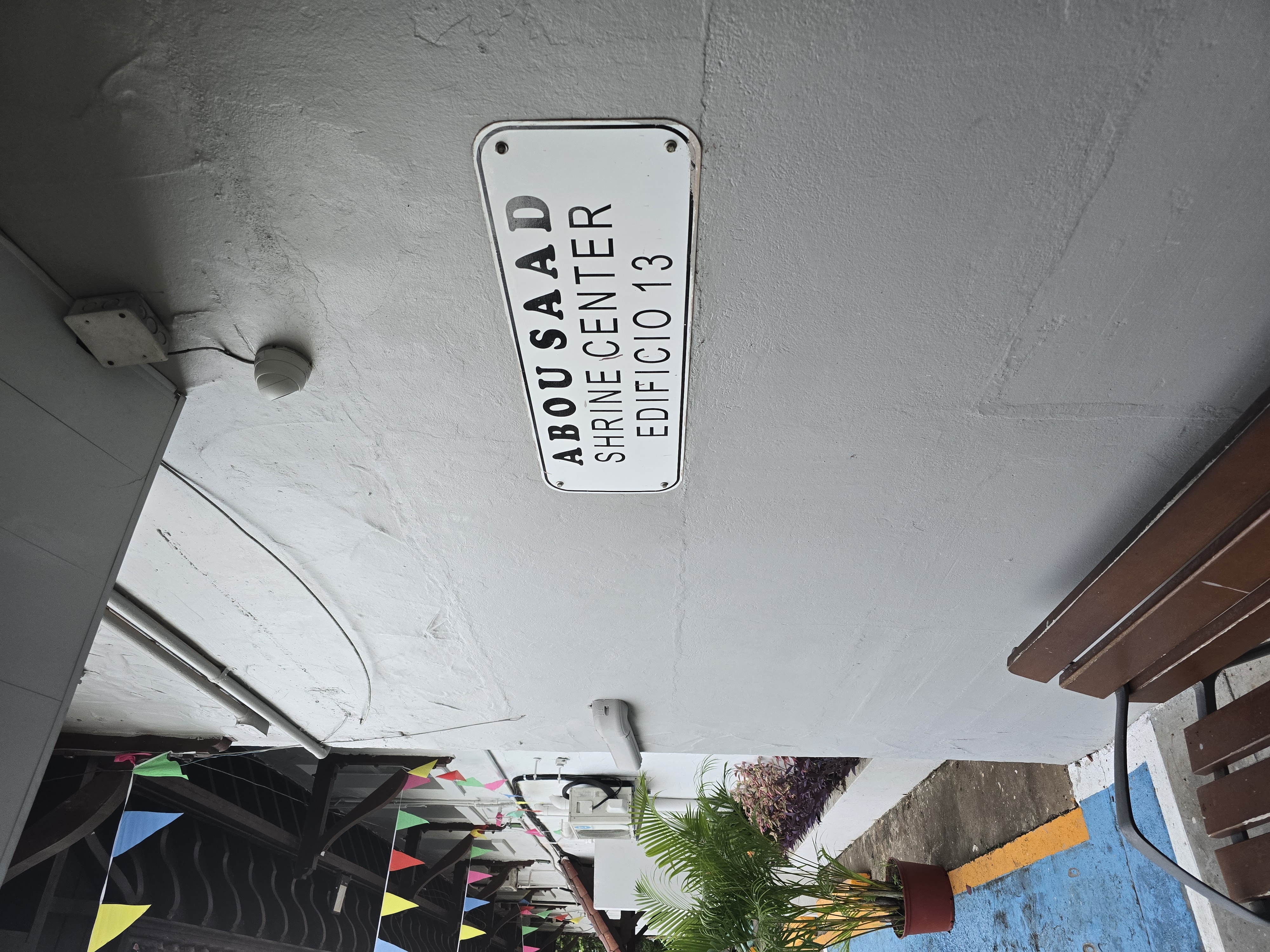
Abou Saad Shrine Center - Edificio 13
Ah, yes. We behold here a paradox, a monument to the fleeting aspirations of man, rendered in the stark, unyielding permanence of a sign. "Abou Saad Shrine Center, Edificio 13." A name, a designation, a number. What is a shrine, truly? Is it merely a building, a structure of concrete and consequence, or is it a vessel for the intangible, the yearning of the human spirit for something beyond the mundane?
Consider the juxtaposition. The vibrant, almost childish gaiety of the bunting, those small, triangular flags, fluttering in a breeze we cannot feel but can infer, remnants perhaps of a forgotten celebration, an echo of fleeting joy. And beneath it all, the hard, uncompromising wall, painted in an indifferent grey, bearing the inscription of purpose.
This "Shrine Center," this "Edificio 13" – it is, in its essence, a testament to order, to the desperate human need to categorize, to number, to impose meaning upon the chaotic expanse of existence. It stands, silent and stoic, like a weary sentinel guarding secrets, or perhaps, guarding nothing at all. The very word "shrine" conjures images of reverence, of sacred space, of quiet contemplation. Yet here, it is reduced to a label, a postal address for the soul.
And observe the immediate surroundings: a bench, stark and functional, awaiting the weary traveler, the contemplative soul, or simply, nothing. A lone potted plant, a stubborn splash of green against the uniformity, striving for life in a utilitarian world. And the curious blue paint on the ground, a demarcation, a boundary, another artificial line drawn in the sand of our fleeting days.
One wonders, what rituals are enacted here? What desires are whispered into the humid Panamanian air? Is it a place of genuine spiritual endeavor, or merely another outpost in the great, absurd theater of human endeavor? The sign offers no answers, only a name, a number, a silent challenge to our very perception of meaning. It is a document of human ambition, perhaps a testament to a grand vision, or merely a humble reality. The truth, as always, remains elusive, shrouded in the banality of the everyday.
The Abou Saad Shrine Center in Panama
You've spotted a sign for the Abou Saad Shrine Center, indicating a lodge of Shriners International in Panama. While Shriners are well-known benevolent organizations in North America, their presence and activities in Central and South America might be less familiar.
Shriners International is a fraternity based on fun, fellowship, and the Masonic principles of brotherly love, relief, and truth. They are perhaps most famous for their distinctive red fezzes and for operating Shriners Hospitals for Children, which provide specialized medical care to children regardless of the families' ability to pay.
The sign you see here, "Abou Saad Shrine Center Edificio 13," points to their local headquarters or a meeting place. "Edificio 13" simply means "Building 13" in Spanish, indicating its specific location within a complex or a numbered building. The festive string of colorful triangle flags visible in the background might suggest a recent event or celebration, perhaps a typical social gathering that many Shrine Centers host to foster community and raise funds for their charitable endeavors. It’s a fascinating example of how global fraternal organizations like the Shriners establish a presence and contribute to communities far from their primary origins.
Shriners International in Panama
The sign indicates the "Abou Saad Shrine Center, Edificio 13." This is likely a building associated with the Abou Saad Shrine Club of Panama, a local chapter of the Shriners International fraternity. The Shriners are a Masonic offshoot organization, known globally for their distinctive red fezzes and their philanthropic work, particularly their network of Shriners Hospitals for Children, which provide specialized medical care regardless of a family's ability to pay.
The organization's full name is the Ancient Arabic Order of the Nobles of the Mystic Shrine, or A.A.O.N.M.S. You might encounter them in parades during civic events, often driving miniature cars, or involved in various community service projects. Membership is open to Master Masons. Their symbolism and regalia draw from Middle Eastern and North African imagery, though the fraternity originated in New York City in 1870.
Abou Saad Shrine Center, Panama
The sign points to the Abou Saad Shrine Center, Edificio 13 (Building 13). This is specifically the Shriners International temple in Panama, located in Albrook. Shriners International, officially the Ancient Arabic Order of the Nobles of the Mystic Shrine (A.A.O.N.M.S.), is a North American-based fraternal organization, founded in 1870, with a focus on fun, fellowship, and philanthropy. They are best known for their network of Shriners Hospitals for Children, providing specialized care. To become a Shriner, one must first be a Master Mason in Freemasonry.