
Eddie Codel
The Stone Hearths of the WPA
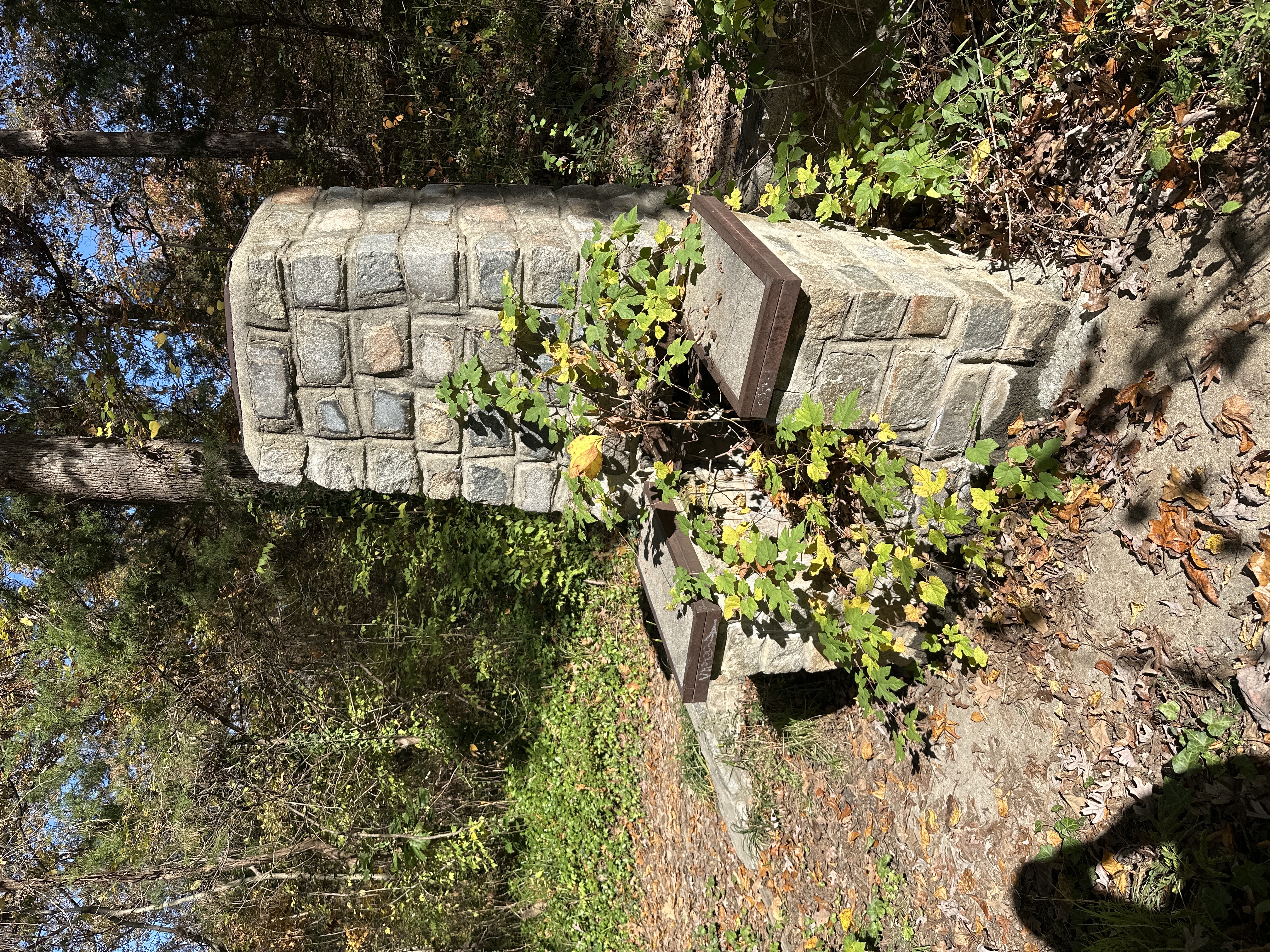
Joseph Bryan Park is home to several of these weathered stone structures, which are actually remnants of the Great Depression era. This particular cobble and mortar monument is one of many stone fireplaces and pavilions built in the 1930s by the Young Men’s Christian Association (YMCA) and the Works Progress Administration (WPA).
During the 1930s, as part of President Franklin D. Roosevelt's New Deal, federal programs like the WPA provided jobs for millions of unemployed Americans. In Richmond, these workers were tasked with transforming Bryan Park from a simple wooded estate into a robust public recreational space. They used local stone to create rustic, durable amenities that were intended to blend in with the natural landscape. The "throne-like" appearance of this structure—with its tall central chimney and flanking side ledges—was a common architectural style for outdoor park ovens and fireplaces at the time, designed to look as if it grew naturally out of the forest floor.
Beyond its role in the New Deal, the ground this structure sits on holds significant historical weight. This area was originally part of a plantation known as "Young's Spring." In 1800, it was the intended gathering point for Gabriel’s Rebellion, one of the most sophisticated planned slave uprisings in U.S. history. While a massive thunderstorm ultimately prevented the revolt from taking place, the park is now a recognized site on the Virginia Landmarks Register, serving as a layer of history where 19th-century struggle meets 20th-century public works. Today, as nature slowly reclaims these stone hearths, they stand as silent monuments to the labor and social history that shaped the modern city of Richmond.
Gabriel's Rebellion and the Stones of Bryan Park
Joseph Bryan Park is listed on the National Register of Historic Places and was originally part of a 19th-century estate known as "Young’s." This stone structure is a remnant of the park’s original entrance gates and decorative stone features constructed in the early 20th century, specifically commissioned by Belle Bryan in memory of her husband, Joseph Bryan, a prominent Richmond publisher and philanthropist.
The most historically significant event associated with this land is Gabriel’s Rebellion of 1800. An enslaved blacksmith named Gabriel Prosser planned one of the most sophisticated slave uprisings in U.S. history here. He organized hundreds of enslaved people to march on Richmond to kidnap Governor James Monroe and demand the abolition of slavery. The plot was thwarted just before execution by a massive thunderstorm that washed out the bridges over Young’s Spring (located within the park) and by two informants who alerted authorities. Gabriel and 25 others were subsequently executed.
The park’s wooded areas, particularly around the creek beds, also served as a focal point for the 1862 Peninsula Campaign during the American Civil War, as Richmond’s outer defenses ran through these hills to protect the Confederate capital from Union advancement.
The Stone Relics of Gabriel’s Gathering Ground
Joseph Bryan Park, a 262-acre historic site, was once the "Young's Spring" plantation, notable as the assembly point for **Gabriel’s Rebellion** in 1800. Gabriel, an enslaved blacksmith, planned one of the most sophisticated slave revolts in U.S. history, aiming to capture Richmond and negotiate for abolition. A massive thunderstorm flooded the bridges, delaying the march and leading to betrayal by two followers; Gabriel and 25 others were subsequently hanged.
These stone structures are remnants of the park's early 20th-century infrastructure. Donated to the city in 1910 by Belle Bryan in memory of her husband, the park was designed by Charles Gillette. During the Great Depression, the **Works Progress Administration (WPA)** and Civilian Conservation Corps (CCC) utilized granite and local fieldstone to build these ornamental gateposts, shelters, and water fountains. The masonry style, known as "Park Architecture" or "National Park Service Rustic," was intended to harmonize man-made structures with the natural environment. Today, the park is famous for its massive Azalea Garden and its status on the National Register of Historic Places.