UG
Ulrich Gall
Hidden Tech in the Naxi Heartland
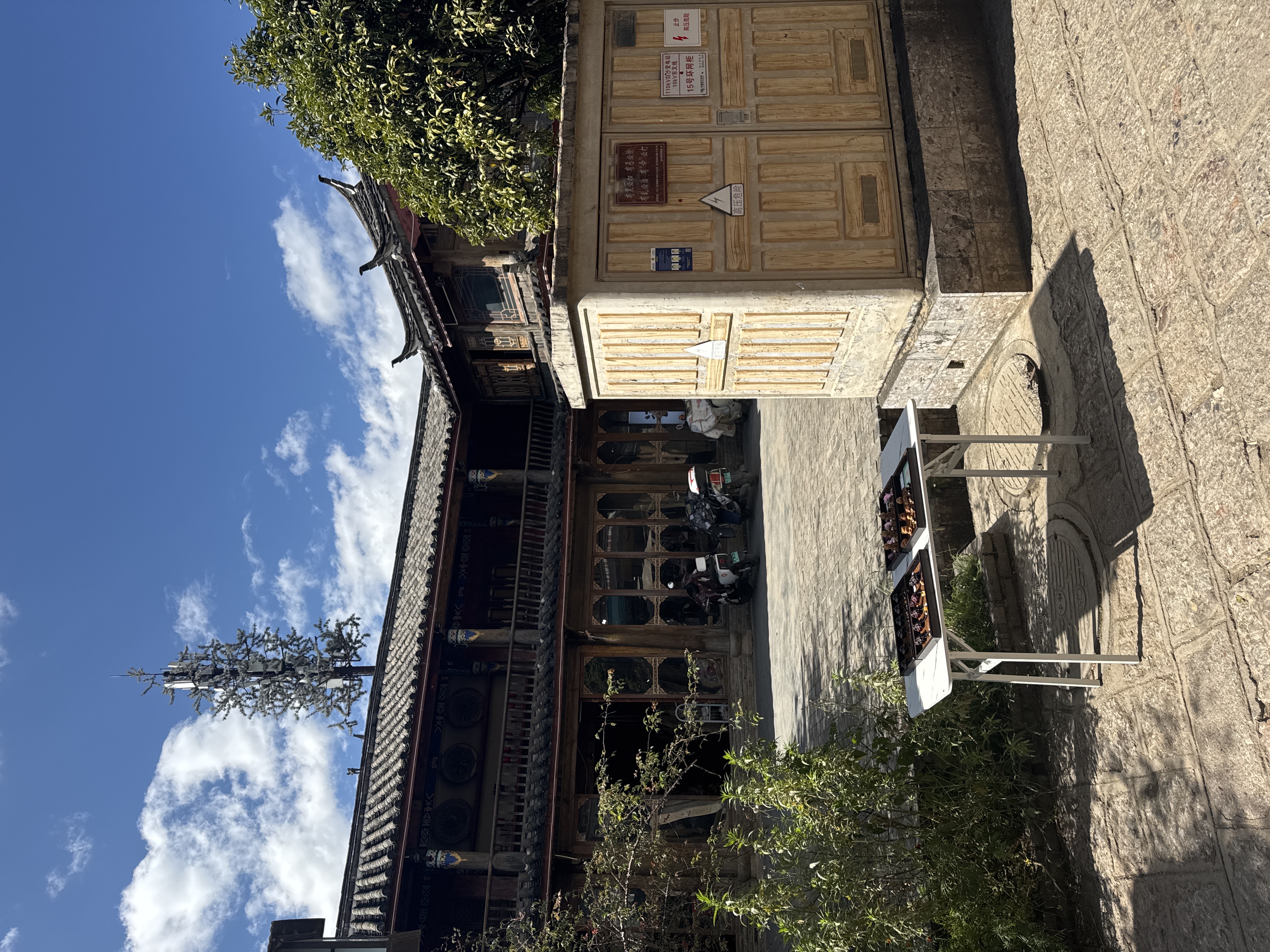
Even in a place as ancient as Lijiang, modern technology has a way of hiding in plain sight, as seen by the cell tower behind this courtyard designed to look like a metallic, frost-covered pine tree. This type of aesthetic camouflaging is common in China’s UNESCO World Heritage sites to ensure that essential 5G infrastructure doesn't clash with the traditional wooden architecture of the Naxi people.
The building itself is a classic example of the "three rooms and a wall screen" style typical of the Naxi ethnic group who inhabit this region of Yunnan. You can see the characteristic "flying eaves" on the roof, which curve upward to ward off evil spirits and allow more sunlight into the courtyard. The intricate wood carvings on the doors are not just decorative; they often tell stories of harmony between humans and nature, a core tenet of the local Dongba religion.
What looks like a large wooden cabinet in the foreground is actually a cleverly disguised electrical transformer box. It has been painted and textured to mimic the grain and color of the wooden pillars behind it so it blends into the historic streetscape. The red and white signs on it are standard safety warnings; the triangular one with the lightning bolt reads "High Voltage, Danger" (高压危险), while the others provide maintenance contact information for the local power bureau.
The small table nearby displays a variety of traditional local snacks, likely hand-pressed flower cakes or dried yak meat, which are staples of the Yunnan highland diet. This combination of ancient architectural styles, street-side commerce, and high-tech infrastructure hidden as artificial foliage reflects the unique way Lijiang balances its identity as a living museum with the needs of a modern tourist destination.
Camouflaged Connectivity in Lijiang
The tall, frosted tree rising behind the courtyard is a disguised cellular base station, a common sight in UNESCO World Heritage sites like Lijiang. These "biomimetic towers" are designed to provide modern 5G and 4G connectivity while adhering to strict aesthetic regulations meant to preserve the historic skyline of the Naxi people’s traditional architecture.
The wooden utility box in the foreground reflects a similar local policy. It is an electrical transformer cabinet camouflaged with wood-textured paneling and traditional decorative motifs. This ensures that essential infrastructure for the surrounding businesses—which often operate out of centuries-old timber structures—doesn't clash with the "Old Town" atmosphere.
Lijiang's preservation laws are among the strictest in China. The traditional Naxi buildings seen here feature distinctive "flying eaves" and post-and-beam construction designed to withstand the region's high seismic activity. This architectural style, which uses no nails, allows the buildings to flex during earthquakes, a necessity in the shadows of the Jade Dragon Snow Mountain.
Modern Camouflage in Baisha Old Town
Traditional Naxi architecture in Baisha Old Town features timber-frame construction with distinctive "cat-ear" curved roof gables and gray tile roofs. The tall, white, spindly structure behind the building is a cellular tower disguised as a pine tree, a common sight in China’s heritage zones to provide 5G coverage without clashing with the historic skyline.
The small table displays handmade "yak bone" carvings, a ubiquitous local souvenir; these are often actually made from camel bone or resin due to the high cost of authentic yak bone. The large utility box in the foreground is an electrical transformer, specifically disguised with wood-panel texturing and a traditional stone base to blend into the ancient streetscape. These boxes are essential for powering the rapid modernization and tourist infrastructure within an autonomous county that remains home to the Naxi people, who still practice the Dongba religion—the only place in the world where a hieroglyphic writing system is still actively used today.