UG
Ulrich Gall
The Living Hieroglyphs of Lijiang
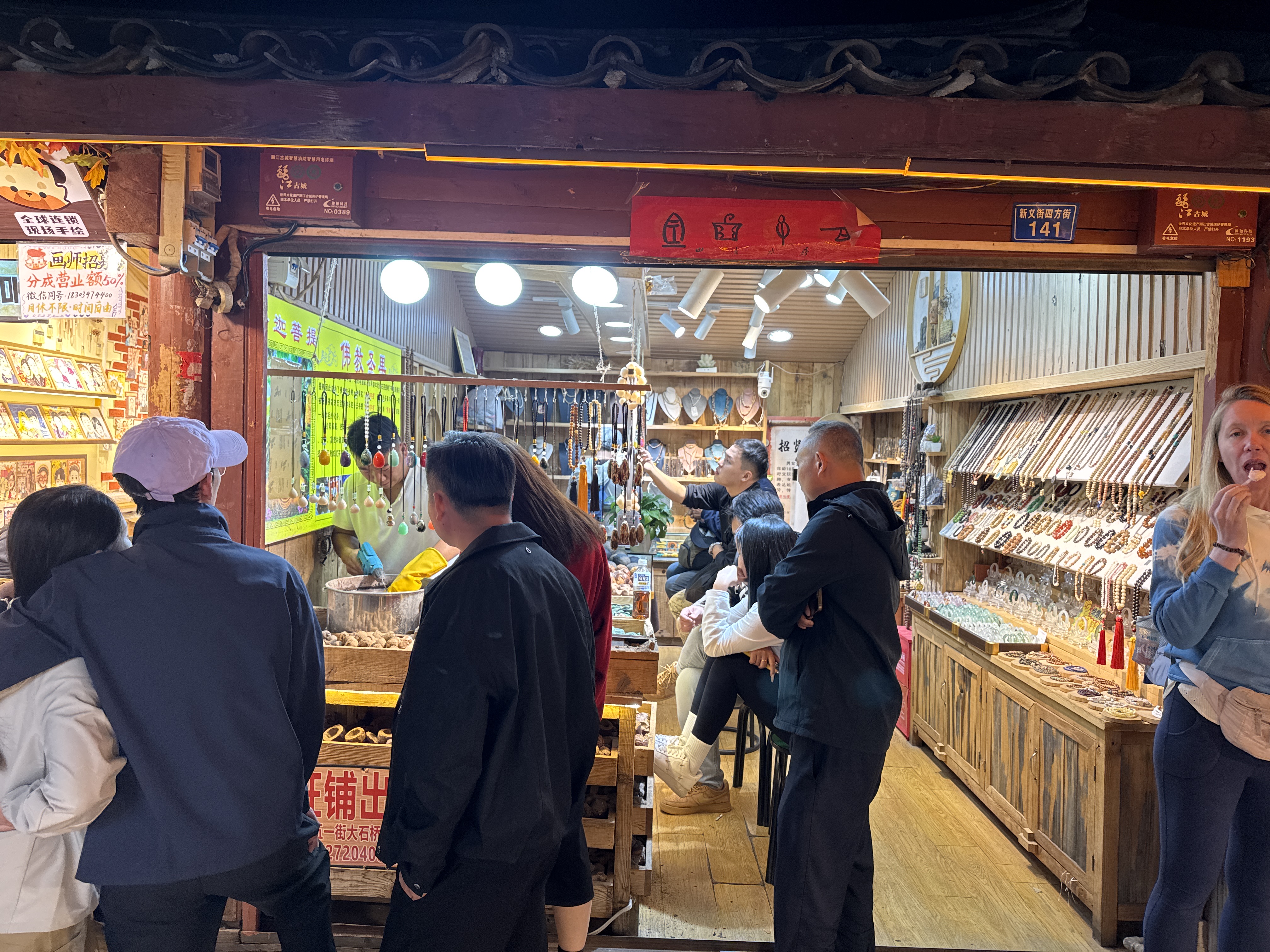
While the shops in Lijiang Old City are famous for their silver and silks, the most intriguing cultural detail here is actually hidden in plain sight on the red banner above the shop entrance. You’ll see four simple, stylized symbols that look like sketches of a fish, a mountain, an eye, and a tool. These aren't just art; they are "Dongba" symbols, the only hieroglyphic writing system in the world that is still actively used today.
These symbols belong to the Naxi people, the ethnic group that founded Lijiang and has lived in this high-altitude region of Yunnan for over a thousand years. Unlike modern alphabets, Dongba script is pictographic—meaning the character for "fish" actually looks like a fish. Historically, this script was used exclusively by Naxi shamans, known as Dongbas, to record religious rituals and creation myths. Today, you’ll see it preserved across the city on shop signs and souvenirs as a proud marker of Naxi identity.
The shop itself specializes in another local obsession: "Bodhi seeds" and ornamental nuts. If you look at the counter where the man is working, you'll see a large bowl of what look like rough, brown pits. These are seeds from various palm and fruit trees, which are highly prized in Tibetan Buddhist culture—the dominant religious influence in this part of Yunnan. The shopkeeper uses tools to peel away the rough outer husks to reveal a smooth, often white or patterned core. These are then polished and strung into the necklaces and bracelets lining the walls. Locals and pilgrims believe that wearing these seeds, or "Bodhi," brings spiritual merit and calm, but for many visitors, they have become a fashionable way to carry a piece of the Himalayan foothills with them.
The blue street sign above the door, marked "141," also bears the name of the street in both Chinese characters and the Naxi Dongba script, ensuring that even as Lijiang becomes a modern travel destination, its ancient visual language remains part of the daily landscape.
The Living Hieroglyphs of Lijiang
The red banner above the entrance features **Dongba symbols**, the only hieroglyphic writing system still in active use today. It belongs to the Naxi people, a Tibeto-Burman ethnic group indigenous to the Lijiang region. Unlike modern alphabets, this script is pictographic and was traditionally used by *Dongba* (priests) for ritual texts and exorcisms.
The wooden beads and jewelry filling the shop are often carved from **Bodhi seeds** (*Ficus religiosa*) or sandalwood. In Tibetan Buddhism, which heavily influences Yunnan, prayer beads (malas) typically consist of 108 beads, representing the 108 human passions that one must overcome to reach enlightenment.
The vendor in the yellow gloves is likely processing **Tagua nuts** or similar plant ivory, often used in China as a sustainable and legal alternative to elephant ivory for intricate carvings. The presence of **Yak milk tea** nearby is a dietary staple of the high-altitude Himalayan plateau; the fat content from yak butter provides essential calories and prevents lips from cracking in the dry, thin mountain air.
Dongba Hieroglyphs and Bodhi Seeds
Lijiang’s Old City is a hub for Dongba culture, the belief system of the Naxi people. The red banner above the shop features Dongba script, the world’s only surviving actively used hieroglyphic writing system. Unlike phonetic alphabets, these symbols represent concepts directly.
The shop specializes in Bodhi seed (Bodhi-zi) jewelry, a staple of Tibetan Buddhist practice prevalent in Yunnan. These aren’t actually seeds from the Bodhi tree (*Ficus religiosa*) but are usually dried fruits from the *Elaeocarpus ganitrus* (Rudraksha) or various palm species. The "thousand-eye" variety seen here comes from the Rattan palm; once polished, the natural vascular bundles create a distinctive speckled pattern.
Culturally, these beads serve as "counters" for mantras, but in Lijiang, they are often marketed as protective amulets. The Naxi people traditionally practiced a mix of animism and Tibetan Buddhism, which explains the prevalence of these spiritual items in a commercial tourist setting.