
Elisabeth de Kleer
Naxi Dongba Hieroglyphs and Creation Murals
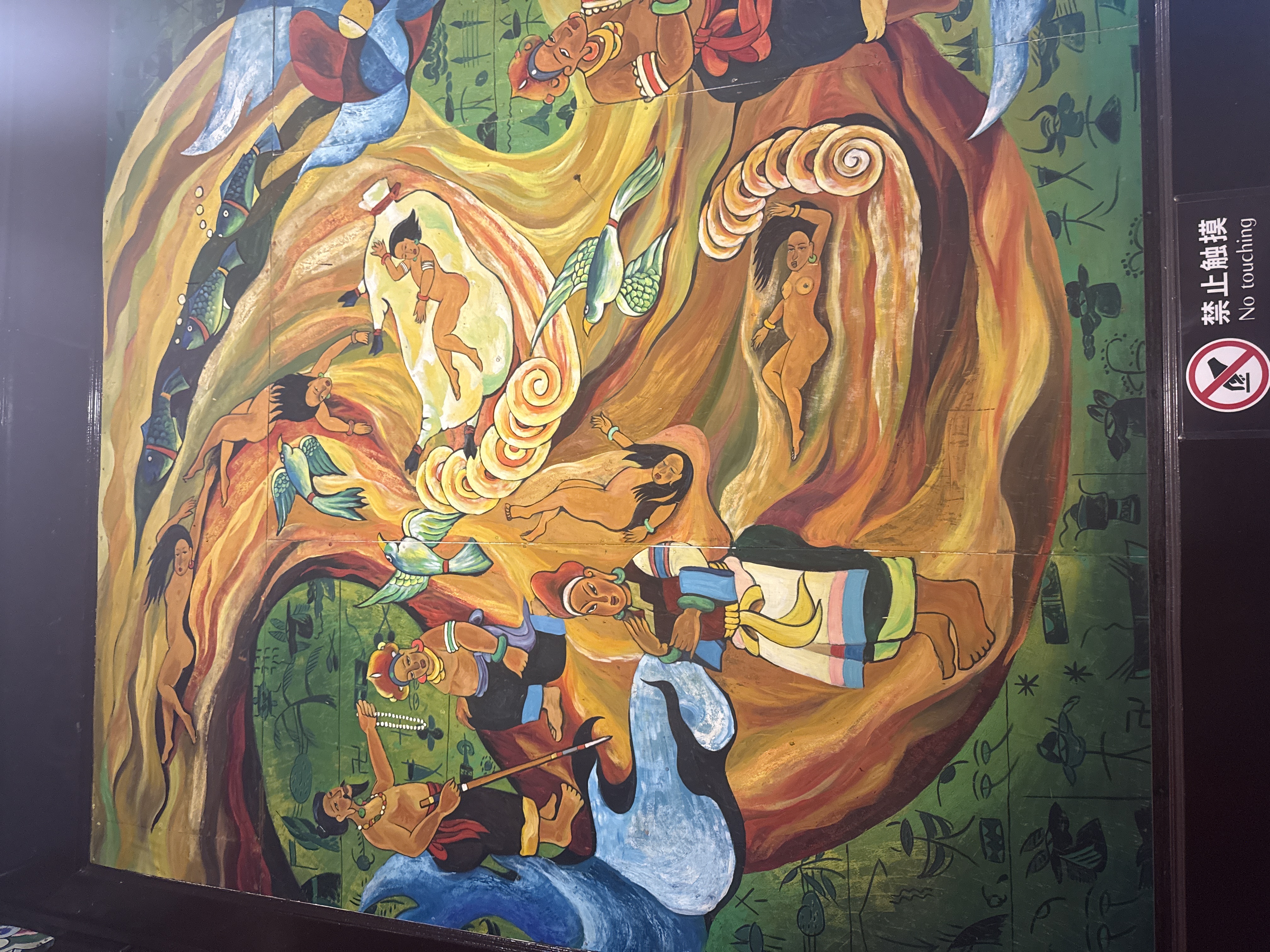
Traditional Naxi Dongba mural, likely inside Wangu Tower. Features **Dongba glyphs** at the bottom—the world's only surviving actively used hieroglyphic writing system. Used by the Naxi people, an ethnic minority in Yunnan, these symbols are more pictographic than Chinese characters, often representing spirits, animals, and daily life.
The central scene depicts **Naxi creation myths or the afterlife journey**, blending elements of Tibetan Buddhism, Taoism, and indigenous animism. Note the interplay between humans, deities, and nature: naked figures often represent the soul's purity or the primordial state of humanity before the imposition of rigid social structures. The presence of the swastika (left) is the *wan* symbol, a traditional sign of auspiciousness and eternity in East Asian spiritualism, predating Western political associations.
Unlike mainstream Han Chinese art, Naxi murals are known for bold, earthy pigments and a "primitive" stylistic energy that prioritizes narrative flow over anatomical precision. The inclusion of semi-nude figures reflects a historically more liberal view of the body within Naxi mountain culture compared to the Confucian modesty of the lowlands.