
Eddie Codel
The Jet Nest of Keflavík
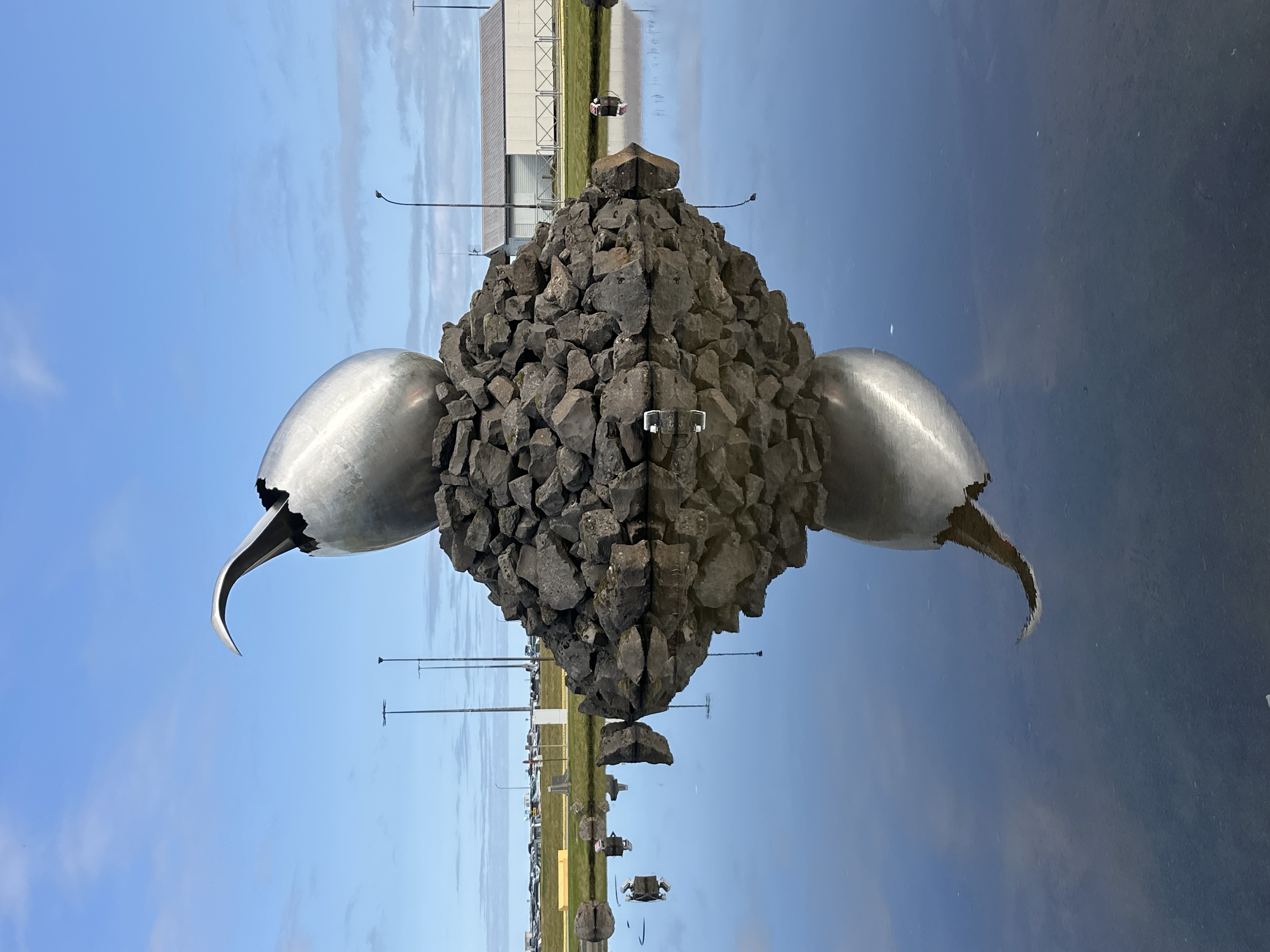
Standing just outside the Keflavík International Airport terminal, this striking stainless steel sculpture tells a story of birth, survival, and the unique avian history of Iceland. Known as "Jet Nest" (or *Þytsreiður* in Icelandic), it was created by the artist Magnús Tómasson in 1996 to celebrate the opening of the Leif Erikson Air Terminal. The sculpture features a giant egg perched atop a rugged mound of volcanic basalt rocks, with a sleek, wing-like shape—reminiscent of both a jet turbine and a bird’s beak—piercing through the shell.
The imagery is a clever double entendre. On one level, it represents the "hatching" of modern Icelandic aviation and the airport itself as a gateway for international flight. On a deeper level, it pays homage to the many migratory birds that use Iceland as a vital nesting ground. The specific shape emerging from the egg is often associated with the Great Auk, a large, flightless bird that was once common in the North Atlantic. Tragically, the Great Auk was hunted to extinction, with the last known breeding pair killed on the nearby island of Eldey, just off the coast of the Reykjanes Peninsula, in 1844.
By placing this "modern" egg on a traditional nest of Icelandic stone, the artist connects the ancient natural world with the contemporary era of jet travel. It serves as a reminder of the fragility of the environment and the island's role as a sanctuary for life. The reflective surface of the steel is meant to catch the dramatic, ever-changing Icelandic sky, making the sculpture look different depending on whether it’s under the midnight sun or the grey clouds of a North Atlantic storm.
Jet Nest at Keflavík
This stainless steel sculpture, titled *Jet Nest*, was created by Icelandic artist Magnús Tómasson in 1996. It serves as a metaphorical tribute to the birth of Icelandic aviation and Keflavík International Airport.
The egg, which appears to be hatching a jet engine's wing or tail section, sits atop a nest of local basalt rocks. It reflects the tension between Iceland’s raw, volcanic nature and modern technological advancement. The sculpture gained additional notoriety among locals and travelers for its resemblance to a Great Auk, a flightless bird that was hunted to extinction in the mid-19th century—the last known pair was killed on the nearby island of Eldey in 1844.
Jet Nest (Þytur) Sculpture
Jet Nest (*Þytur*). Stainless steel and basalt sculpture by Magnús Tómasson, 1996. Located at Keflavík International Airport. Depicts a large steel egg hatching a jet wing/beak.
Symbolizes the birth of Icelandic aviation and the airport's role as a "nest" for international travel. The jagged basalt base mimics Iceland's volcanic landscape. The "chick" emerging is a metaphor for technology (the jet) emerging from nature. Specifically references the Great Auk (*Pinguinus impennis*), a flightless bird native to the North Atlantic—including nearby Eldey Island—that was hunted to extinction in 1844. By combining a jet engine's sleek aesthetic with an egg, the artist bridges the gap between the lost biological history of the region and its modern industrial identity.